
 Save to Pinterest
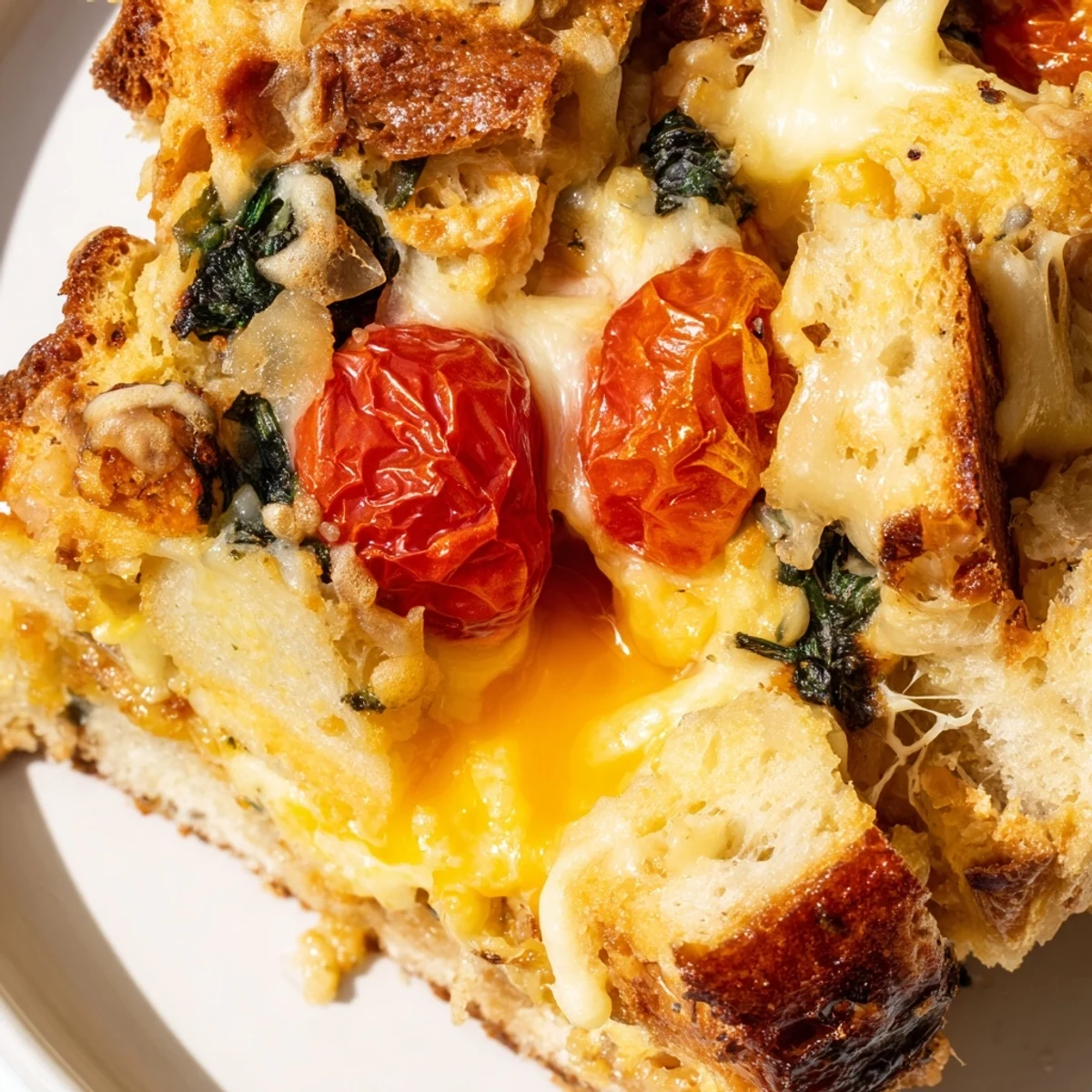
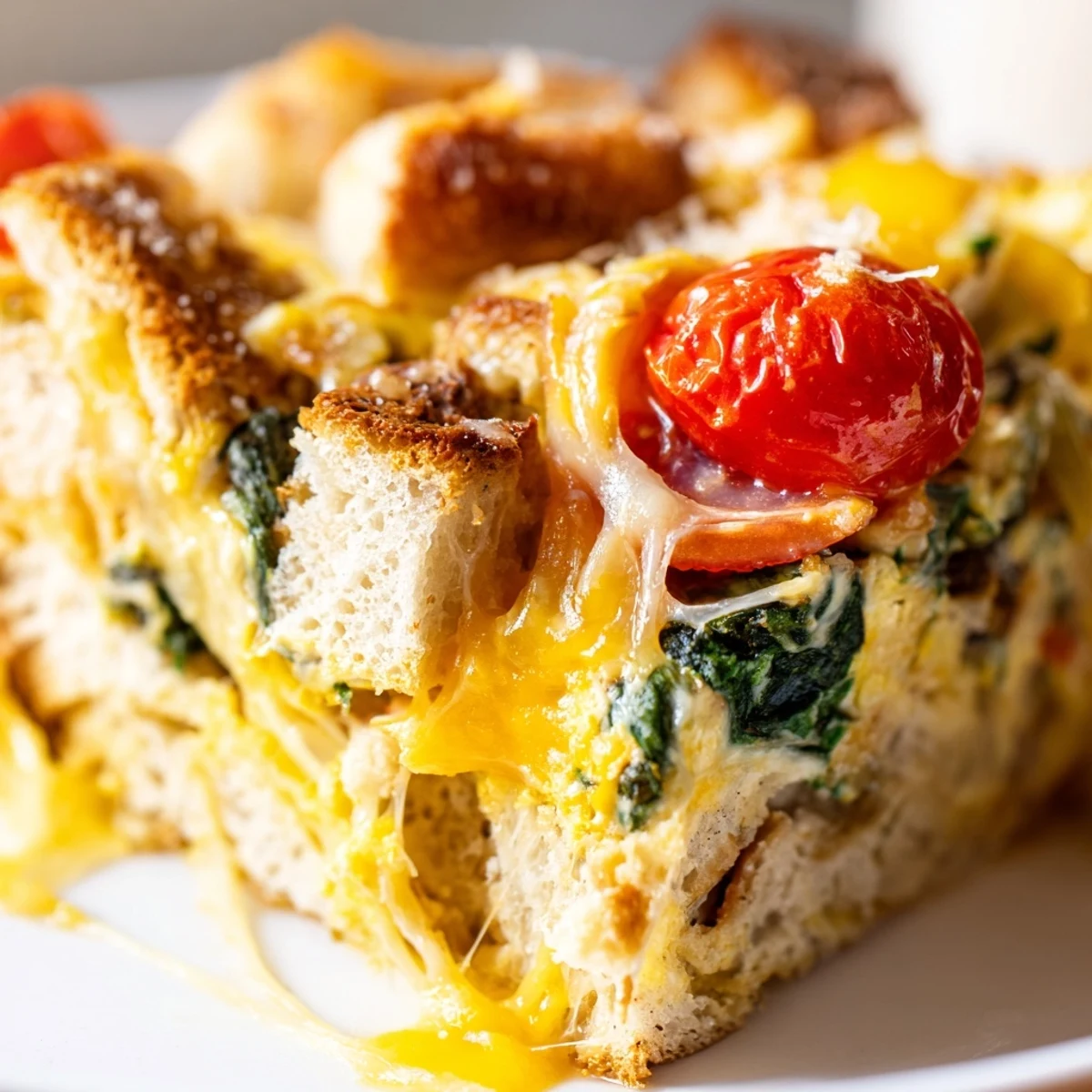
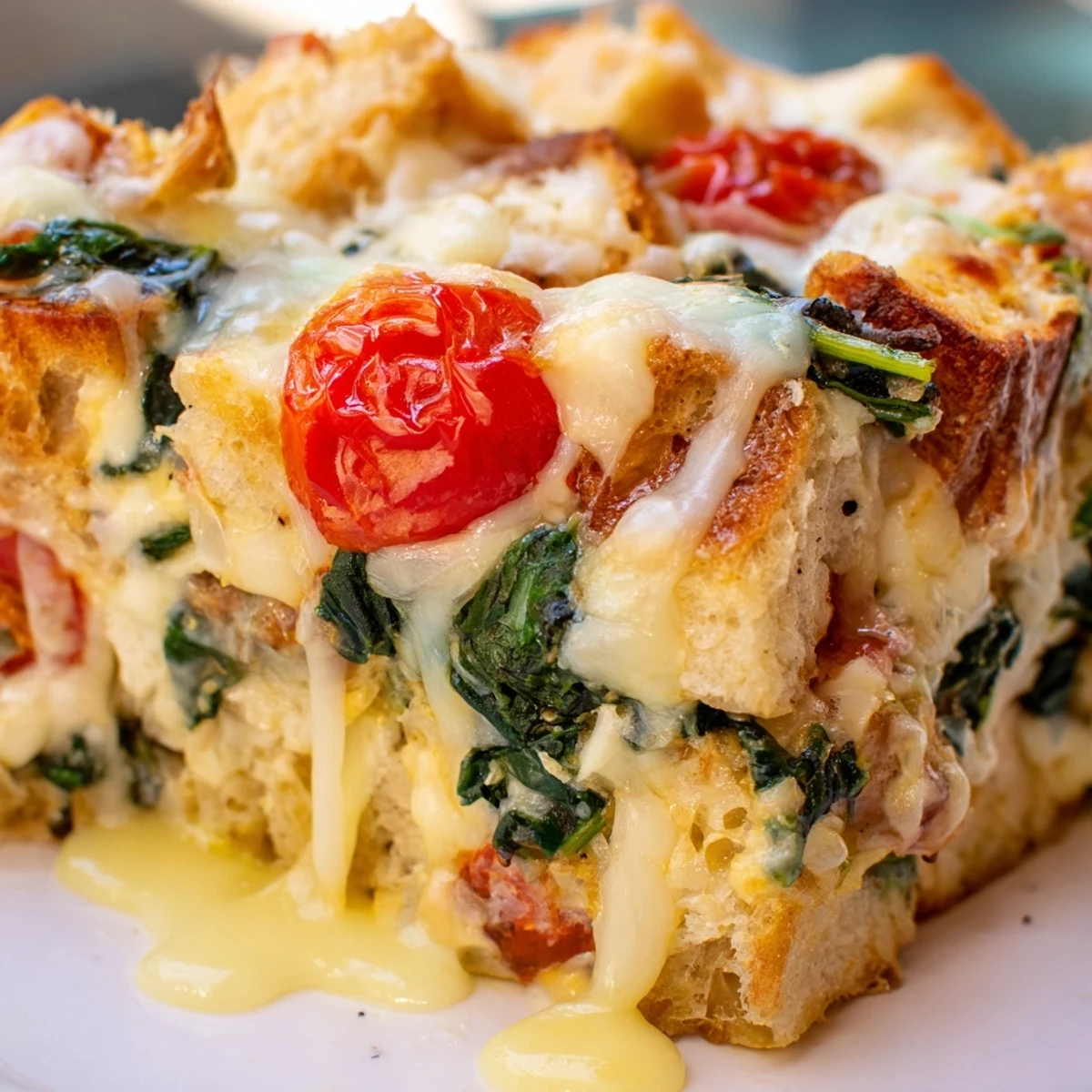
 This satisfying breakfast casserole combines day-old crusty bread with sharp cheddar and nutty Gruyère, soaked in a rich custard of eggs, milk, and cream. Sweet roasted cherry tomatoes crown the top, adding bursts of juiciness that balance the savory elements below. The strata requires just 20 minutes of hands-on preparation before baking into golden, custardy perfection.
What makes this dish special is how the bread transforms in the oven—becoming tender yet structured, while the cheeses melt throughout every layer. The roasted tomatoes caramelize nicely, providing a bright contrast to the creamy, cheesy base. Perfect for feeding a crowd, it can even be assembled the night before and baked fresh in the morning.
The morning I discovered strata was entirely by accident. I had half a loaf of sourdough going stale and houseguests arriving in eight hours, zero plan for breakfast, and a panic that led me to throw bread, eggs, and whatever cheese I had into a dish. When I pulled it from the oven, bubbling and golden with those sweet roasted tomatoes on top, my friend Sarah actually paused mid-conversation to ask what that incredible smell was.
Last New Years Day, I made this for twelve people still wearing pajamas, still slightly glittery from the night before. The dish came out of the oven, someone put on a pot of coffee, and suddenly everyone was hovering around the counter with forks, and honestly, that moment of sleepy, hungry community might be my favorite part of hosting brunch.
Ingredients
- Day-old crusty bread: Sturdy bread holds up better overnight, becoming tender without turning into mush. I usually buy a loaf two days before I plan to make this and leave it sitting on the counter.
- Sharp cheddar cheese: The sharpness cuts through all that rich dairy and egg, giving you something to really taste beyond just creamy.
- Gruyère or Swiss cheese: This melts beautifully and adds that nutty, slightly sweet flavor that makes the strata taste like something from a restaurant brunch.
- Eggs, whole milk, and heavy cream: The combination of milk and cream gives you richness without being overwhelmingly heavy.
- Cherry tomatoes: Roasting concentrates their natural sugars, and that burst of sweetness against all the savory cheese is what makes people ask for seconds.
- Baby spinach: It wilts down into the strata, adding color and making you feel slightly virtuous about eating something green for breakfast.
- Dijon mustard: It is subtle, but it adds a little sharp kick that keeps the custard from tasting flat.
Instructions
- Roast the tomatoes first:
- Crank your oven to 400°F, toss those halved cherry tomatoes with olive oil and salt, and let them get blistered and sweet. This step builds a flavor bomb that will sit on top of your strata like little jewels.
- Soften your aromatics:
- While the tomatoes roast, sauté the onion until it is translucent, then add the spinach just until it collapses. You are not trying to cook them completely, just take the raw edge off.
- Build your custard:
- Whisk together the eggs, milk, cream, mustard, garlic powder, salt, and pepper until no streaks of egg white remain.
- Combine everything:
- Toss the bread cubes in the custard, fold in the onions, spinach, and both cheeses, then spread it all into your greased baking dish.
- Arrange and bake:
- Nestle those roasted tomatoes cut side up all over the surface, cover with foil, and bake at 350°F for 30 minutes before uncovering and letting it get golden for another 20 minutes.
 Save to Pinterest
 My mother called me after trying this recipe, slightly skeptical about a breakfast casserole that required overnight planning. Two weeks later she texted me a photo of her own version, made for book club, with the caption they asked for the recipe.
Make It Ahead
Assemble the entire strata the night before, cover it tightly with foil, and refrigerate. In the morning, let it sit on the counter while the oven preheats so it is not ice cold when it goes in, which helps it cook more evenly.
Cheese Variations
I have made this with everything from pepper jack for a little kick to fontina for supreme melting qualities. Just keep the total amount around three cups, and make sure at least one cheese has some personality.
Serving Suggestions
This strata is substantial enough to stand alone, but a crisp green salad with vinaigrette cuts through the richness beautifully. Fresh fruit on the side adds brightness, and honestly, mimosas or bloody marys do not hurt either.
- Let the strata rest for at least 10 minutes before serving, or it will be slightly soupy when you cut into it.
- The leftovers reheat surprisingly well in the microwave, though the crustiest parts will soften.
- If you are serving a crowd, consider doubling the recipe and using two smaller dishes so everything bakes evenly.
 Save to Pinterest
 There is something deeply satisfying about serving a breakfast that feels special but did not require you to wake up at dawn. That is the magic of strata, really.
Recipe FAQs
- → Can I prepare this strata the night before?
-
Yes, this strata is perfect for make-ahead preparation. Assemble everything in the baking dish, cover tightly, and refrigerate overnight. Let it sit at room temperature for about 20 minutes before baking as directed.
- → What type of bread works best?
-
Day-old crusty bread like sourdough, French bread, or artisan loaf works beautifully. The slight staleness helps the bread absorb the custard without becoming mushy. Fresh bread can be used—just cut it into cubes and let it air out for a few hours.
- → Can I substitute the cheeses?
-
Absolutely. While sharp cheddar and Gruyère provide excellent flavor depth, you can use mozzarella, Swiss, fontina, or even crumbled feta. Just aim for about 3 cups total cheese, mixing melting varieties with something more flavorful.
- → How do I know when the strata is done?
-
The strata is finished when it's golden brown on top, set in the center (no liquid jiggling), and a knife inserted near the center comes out clean. The internal temperature should reach 160°F for the eggs to be fully cooked.
- → Can I add meat to this strata?
-
Certainly. Cooked bacon, sausage, or ham make excellent additions. Cook the meat first, drain excess fat, then layer it with the onions and spinach. About 1 cup of cooked, crumbled meat works well without overpowering the other flavors.
- → How should I store leftovers?
-
Cover the baking dish tightly or transfer individual portions to airtight containers. Refrigerate for up to 3-4 days. Reheat in the microwave or cover with foil and warm in a 350°F oven until heated through.