
 Save to Pinterest
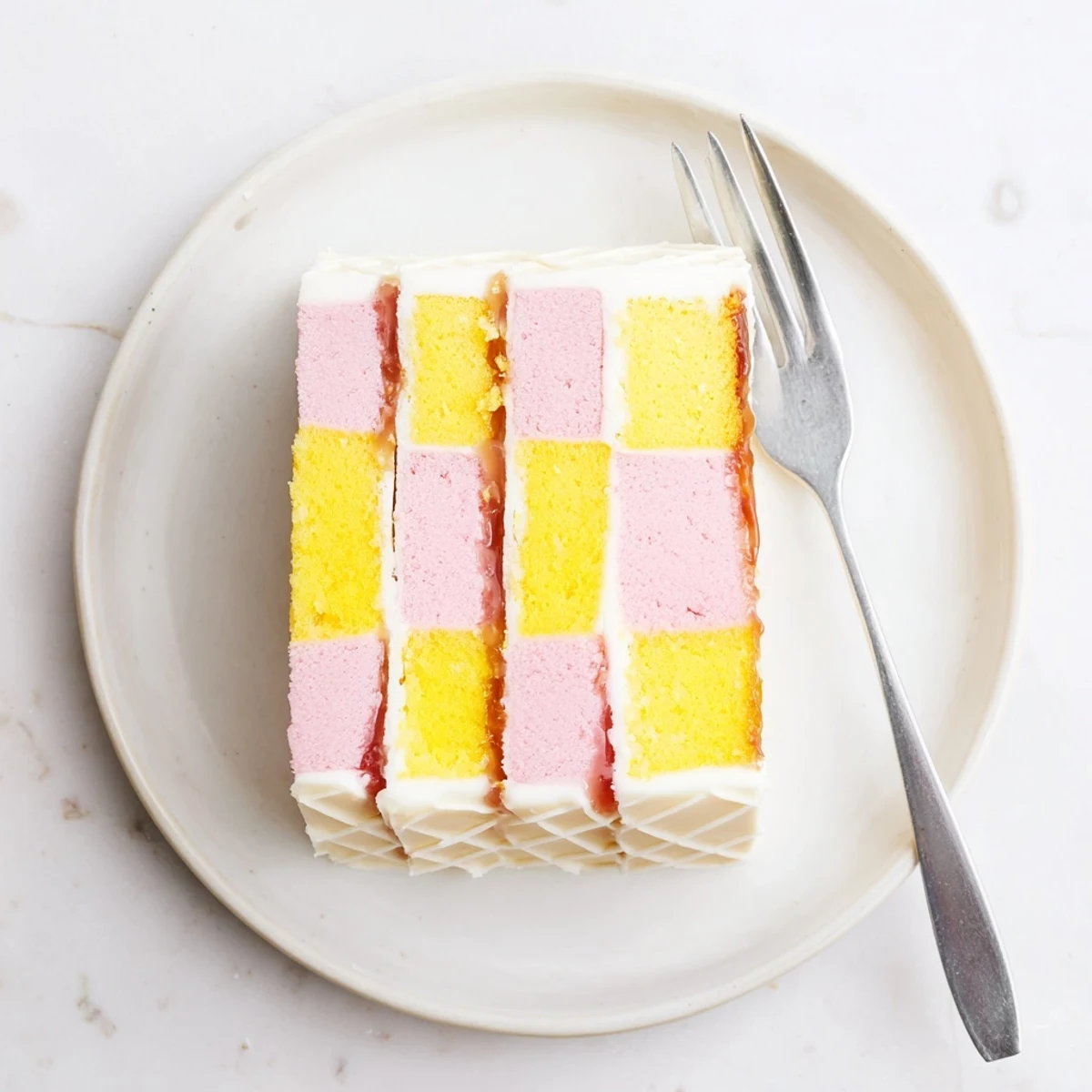
 This traditional British teatime favourite combines vanilla and almond-flavoured sponge cake in a distinctive pink and yellow checkerboard design. The tender sponges are layered with warm apricot jam and encased in smooth marzipan for that iconic presentation. Perfect for afternoon tea or special occasions, the cake requires careful assembly but rewards with stunning results and nostalgic flavours.
The first time I attempted Battenberg Cake, I stood in my tiny kitchen staring at two sponges, wondering how on earth people managed to create that perfect checkerboard pattern without everything crumbling apart. My grandmother had served this at countless afternoon teas, making it look effortless, but there I was with pink batter on my cheek and a foil divider that kept collapsing. Three attempts later, when I finally sliced into that neat grid of yellow and pink, I understood why this cake has endured since Queen Victoria's time.
I made this for my daughter's birthday last spring, mostly because she'd become obsessed with British baking shows. The whole family gathered around the counter when it came time to assemble the checkerboard, everyone holding their breath as I brushed apricot jam on those fragile sponge strips. When my daughter took that first slice and gasped at the perfect pattern inside, all those hours of tweaking the recipe felt absolutely worth it.
Ingredients
- Unsalted butter: Room temperature butter is non negotiable here, it creates the tender crumb that makes this cake so light
- Caster sugar: The fine grains dissolve beautifully into the butter, giving you that smooth professional texture
- Large eggs: Bring these to room temperature too, they'll incorporate much better and prevent the batter from curdling
- Self raising flour: Combined with ground almonds, this gives the perfect lift without making the sponge too tough
- Ground almonds: This is the secret to that classic Battenberg flavour and keeps the sponge wonderfully moist
- Baking powder: Just enough to give the cakes a gentle rise without making them too dense
- Vanilla and almond extract: The double combination creates those authentic British bakery flavours
- Pink food colouring: Gel colouring works best, add a tiny amount at a time for that soft pastel shade
- Apricot jam: The traditional choice that acts as both glue and complementary flavour
- Marzipan: Homemade tastes infinitely better, but good quality shop bought works perfectly too
Instructions
- Prepare your tin like a pro:
- Create a divider with foil and parchment to split your square tin exactly in half, this ensures both sponges are the same size which makes assembly so much easier later
- Cream butter and sugar until pale:
- Beat for at least 5 minutes until the mixture is light and fluffy, this step incorporates air and creates the tender texture we want
- Add eggs gradually:
- Beat in one egg at a time, incorporating fully before adding the next, and if your mixture curdles slightly just add a spoonful of flour
- Fold gently:
- Mix in the flour, ground almonds, baking powder and extracts until just combined, overworking will make the sponge tough
- Create the two colours:
- Divide batter equally between bowls and colour one with pink food colouring, remember you can always add more but you cant take it away
- Bake to perfection:
- Spoon into each side of the tin and bake for 25 to 30 minutes until a skewer comes out clean, the sponges should spring back when lightly touched
- Cool completely:
- Let them rest in the tin for 10 minutes before transferring to a wire rack, warm cake will crumble when you try to trim it
- Trim precisely:
- Cut off any domed tops and edges, then cut each sponge lengthwise into four equal rectangles, this is where a ruler actually helps
- Warm the jam:
- Gently heat apricot jam and push it through a sieve, those little fruit chunks can make your checkerboard lumpy
- Build the pattern:
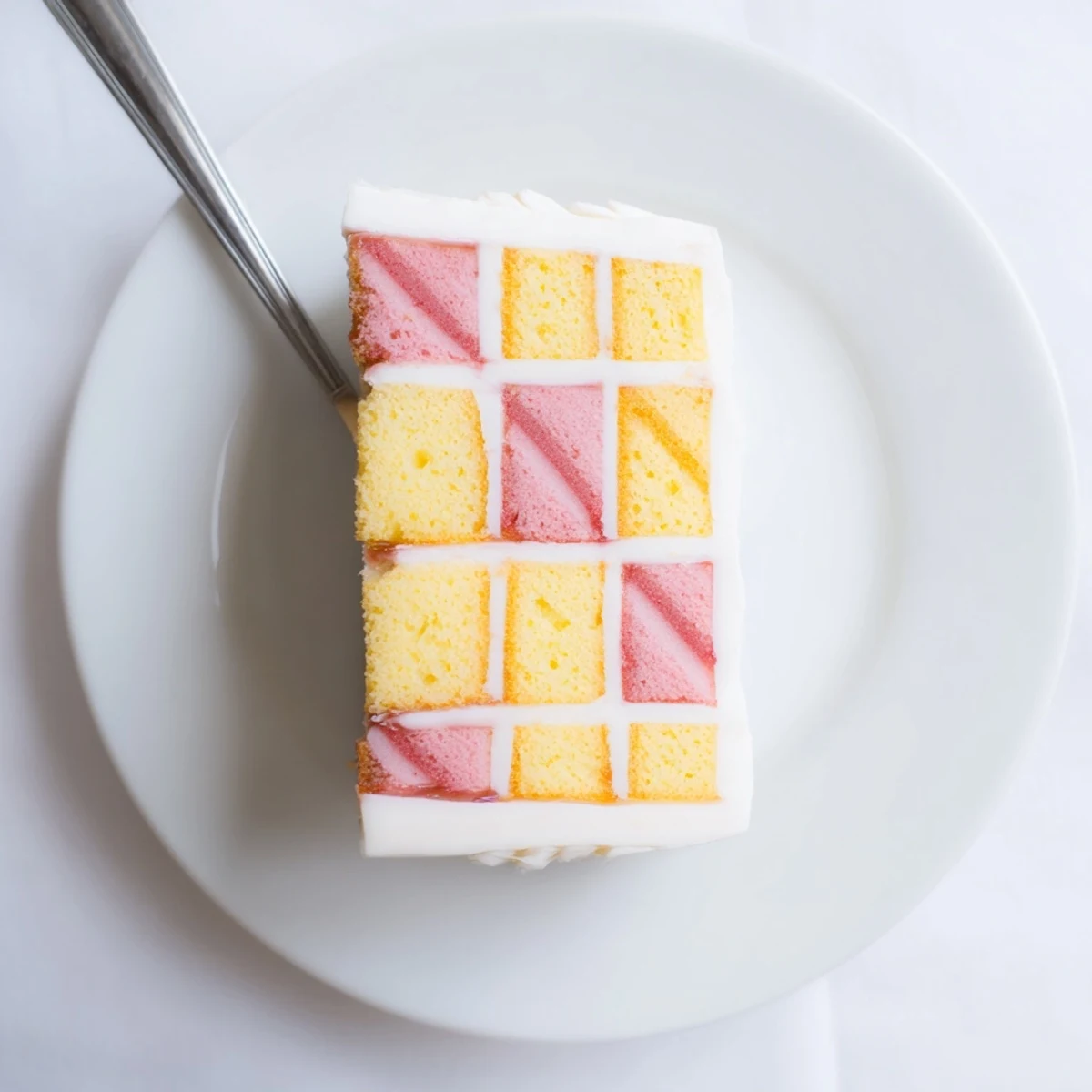
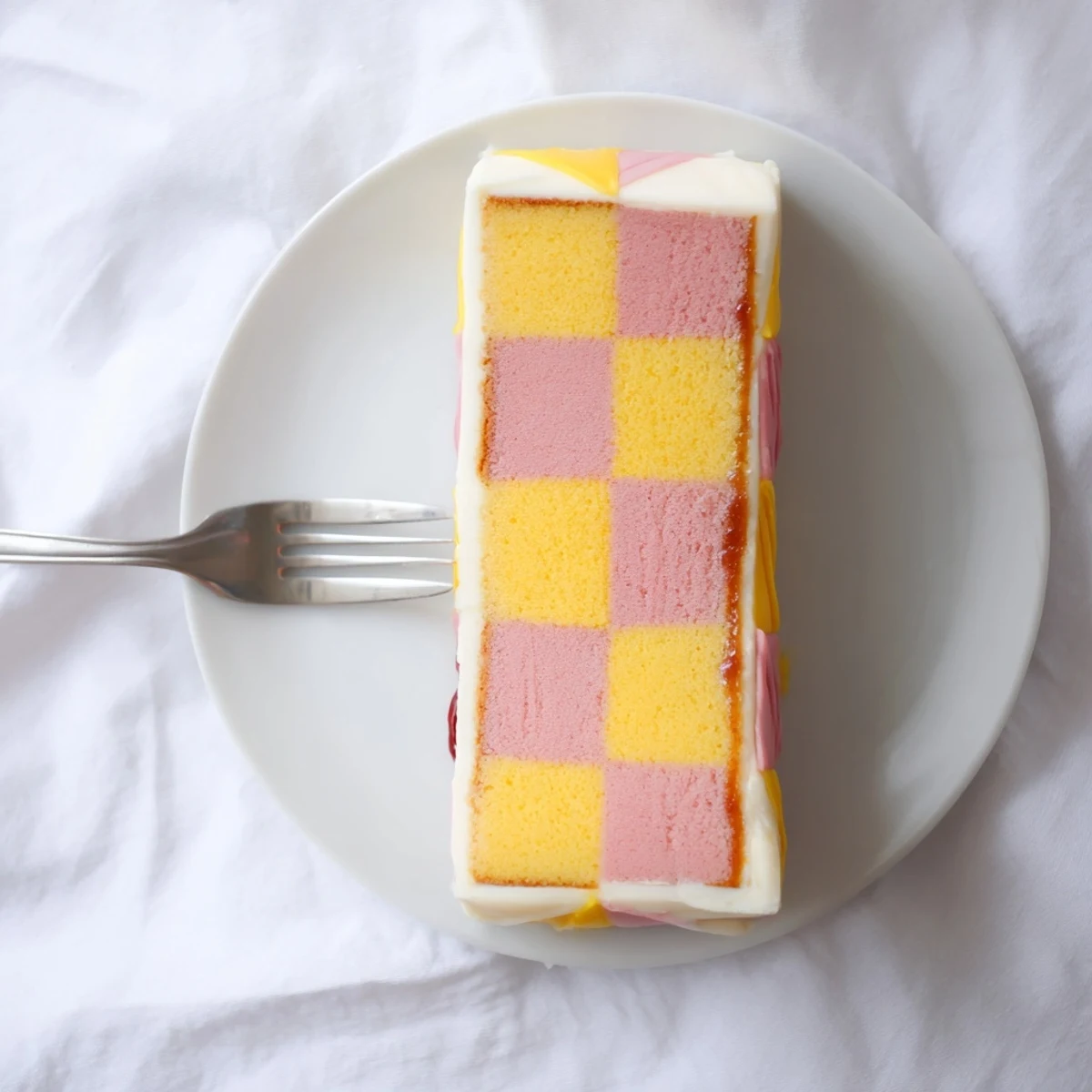
- Brush jam on the long sides of the strips and alternate colours to create that signature checkerboard, two pink and two yellow per layer
- Roll the marzipan:
- Dust your surface with icing sugar and roll into a rectangle thats long enough to wrap around the entire cake with overlap
- Wrap and seal:
- Brush jam all over the outside of your assembled cake, then wrap marzipan around it, pressing gently to seal along the bottom
- Add the finishing touch:
- Lightly score the top with a knife in a diamond pattern, then trim the ends for that perfect neat finish
 Save to Pinterest
 Every time I serve this now, someone always asks how the pattern got inside, as if by magic rather than careful assembly. That moment of cutting through the marzipan and revealing the checkerboard beneath feels like revealing a secret, one that I'm now passing down to my own children who've started helping me in the kitchen.
Making The Perfect Sponge
The ground almonds in this recipe are what make Battenberg so distinctive from other sponge cakes. They add moisture and a subtle nutty flavour that complements both the vanilla and the apricot jam perfectly. I've learned to weigh my ingredients rather than measuring by volume, as precision really matters when you need two sponges to bake at exactly the same rate.
Working With Marzipan
If the marzipan feels stiff, knead it gently with your hands before rolling, the warmth makes it much more pliable. Roll it on a piece of parchment paper rather than directly on your counter, this makes lifting and wrapping around the cake so much easier. Any excess marzipan can be rolled into small balls and dipped in chocolate for a bonus treat.
Storage And Serving Tips
This cake actually improves slightly after a day, as the marzipan softens the sponge and the flavours meld together beautifully. Store it in an airtight container at room temperature, never the fridge, as the marzipan will become unpleasantly firm. When serving, use a sharp knife dipped in hot water and wiped clean between slices for the cleanest cuts.
- Let the cake come to room temperature before serving if you've stored it longer than a day
- The scored pattern on top helps you cut even slices and looks impressively professional
- Serve with a cup of Earl Grey tea for the most authentic British experience
 Save to Pinterest
 Theres something deeply satisfying about making a cake that looks so intricate and yet comes together with just a bit of patience and care. Every slice feels like a little celebration of tradition and craftsmanship.
Recipe FAQs
- → What makes Battenberg cake distinctive?
-
The signature checkerboard pattern of pink and yellow sponge squares, visible when sliced, creates its iconic appearance. The combination of apricot jam filling and marzipan wrapping gives it its characteristic British teatime flavour profile.
- → How do I achieve the checkerboard pattern?
-
Bake two separate coloured sponges side by side, then trim and cut each lengthwise into four equal rectangles. Arrange them alternately—pink next to yellow—brushing with apricot jam between layers to hold the pattern together.
- → Can I use different jam flavours?
-
Absolutely! While apricot jam is traditional, raspberry or cherry jam work beautifully and add lovely tartness. The key is warming and sieving the jam first for smooth application and better adhesion between sponge layers.
- → How long does Battenberg cake keep?
-
Stored in an airtight container at room temperature, it keeps well for up to 4 days. The marzipan coating helps retain moisture. For longer storage, wrap tightly and freeze for up to 3 months, though fresh is always best for texture.
- → Why is my sponge too dense?
-
Overmixing the batter after adding flour can develop gluten, creating toughness. Fold gently until just combined. Additionally, ensure your butter is properly softened and creamed thoroughly with sugar for maximum aeration before adding eggs.
- → Can I make this without almond flour?
-
Ground almonds contribute significantly to texture and flavour. You could substitute with additional self-raising flour, though the cake will be slightly less moist and nutty. For nut allergies, consider using ground seeds or alternative flour blends.