
 Save to Pinterest
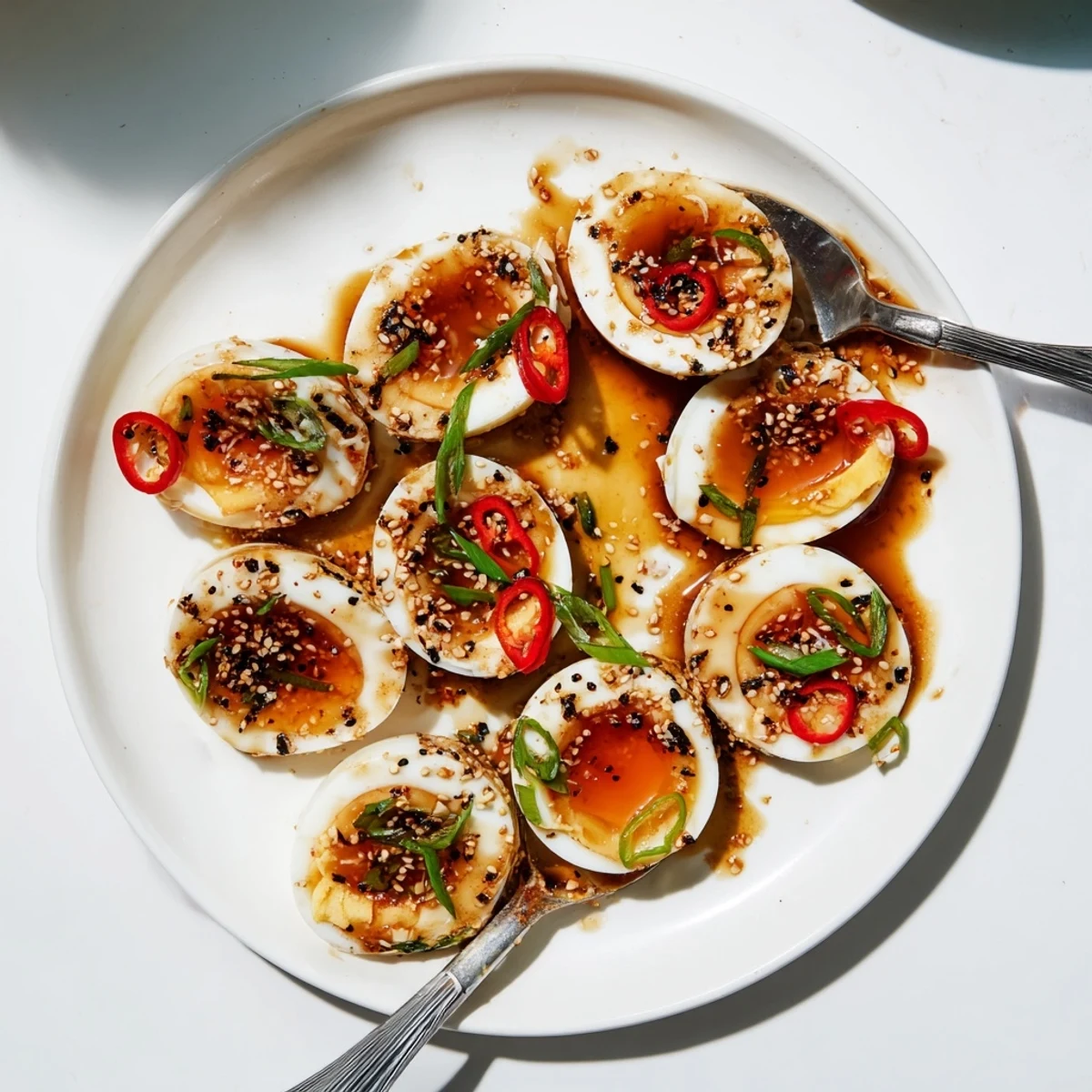
 These Korean-inspired marinated eggs feature perfectly jammy soft-boiled eggs immersed in an aromatic blend of soy sauce, rice vinegar, honey, garlic, and sesame oil. After six hours of refrigeration, the eggs absorb the sweet and savory flavors while developing a beautiful amber hue. The result is a versatile dish that works wonderfully as a protein-packed snack, flavorful side dish, or topping for steamed rice and noodles.
My tiny Seoul apartment kitchen was barely bigger than a closet, but that's where I first watched my halmeoni make these marinated eggs. She'd move with this quiet confidence, cracking eggs into bubbling water like she'd done it a thousand times before. The way she'd hum while mixing the marinade made it seem like magic instead of just soy sauce and garlic. Now every time I peel that first perfect soft-boiled egg, I'm transported back to that cramped kitchen with its giant windows and the smell of garlic everywhere.
Last summer, I made a batch for a barbecue and watched them disappear in minutes. My friend Sarah kept hovering around the platter, asking what I'd done to make them taste so good. The marinade had seeped into the whites just enough to make them taste like they'd been brined for days. Even the kids who claimed they didn't like eggs were reaching for seconds.
Ingredients
- 6 large eggs: Room temperature eggs peel more cleanly, so take them out about 20 minutes before cooking
- 1/2 cup soy sauce: Low sodium gives you more control over the salt level since the eggs absorb so much flavor
- 1/2 cup water: This dilutes the soy sauce just enough so the eggs aren't overwhelmingly salty after marinating
- 2 tbsp honey: Honey dissolves more easily than sugar in cold marinade and adds this subtle floral sweetness
- 2 tbsp rice vinegar: The acidity cuts through the richness and helps balance all those savory flavors
- 2 tbsp sesame oil: Toasted sesame oil is non-negotiable here, it's what gives that authentic Korean flavor
- 3 cloves garlic: Fresh minced garlic is best, but you can also use garlic powder in a pinch
- 2 green onions: Slice these thin so they release their flavor into the marinade more quickly
- 1 red chili pepper: Leave this out if you're sensitive to heat, or add more if you like things spicy
- 1 green chili pepper: This adds a different kind of heat that's more fresh and bright than the red chili
- 1 tbsp toasted sesame seeds: Toast them in a dry pan for 2 minutes until fragrant before adding
Instructions
- Get your water ready:
- Bring a medium pot of water to a rolling boil, then lower the heat slightly so it's not violently bubbling when you add the eggs.
- Boil the eggs perfectly:
- Gently lower each egg into the water with a spoon, then set a timer for exactly 6 minutes for that gorgeous jammy yolk that's just set but still runny.
- Ice bath immediately:
- Transfer the eggs to an ice water bath the second the timer goes off, and let them cool completely for about 5 minutes to stop the cooking.
- Peel carefully:
- Tap the eggs gently on the counter and roll them to crack the shells all over, then start peeling from the wider end where there's usually a little air pocket.
- Mix the marinade:
- Whisk together the soy sauce, water, honey, rice vinegar, sesame oil, garlic, green onions, chili peppers, and sesame seeds until the honey is completely dissolved.
- Marinate the eggs:
- Place the peeled eggs in a container that fits them snugly, pour the marinade over until they're completely submerged, and refrigerate for at least 6 hours.
- Serve and enjoy:
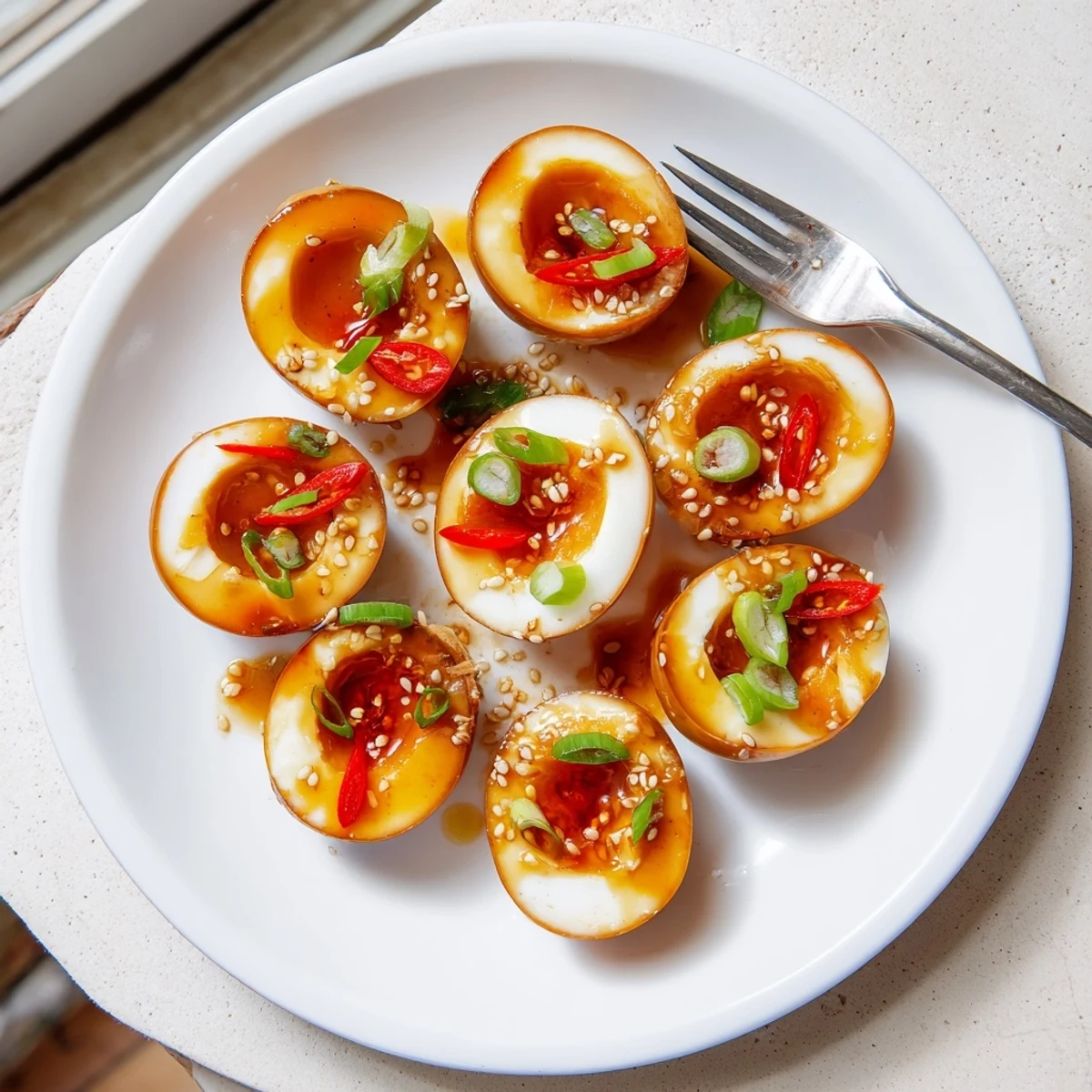
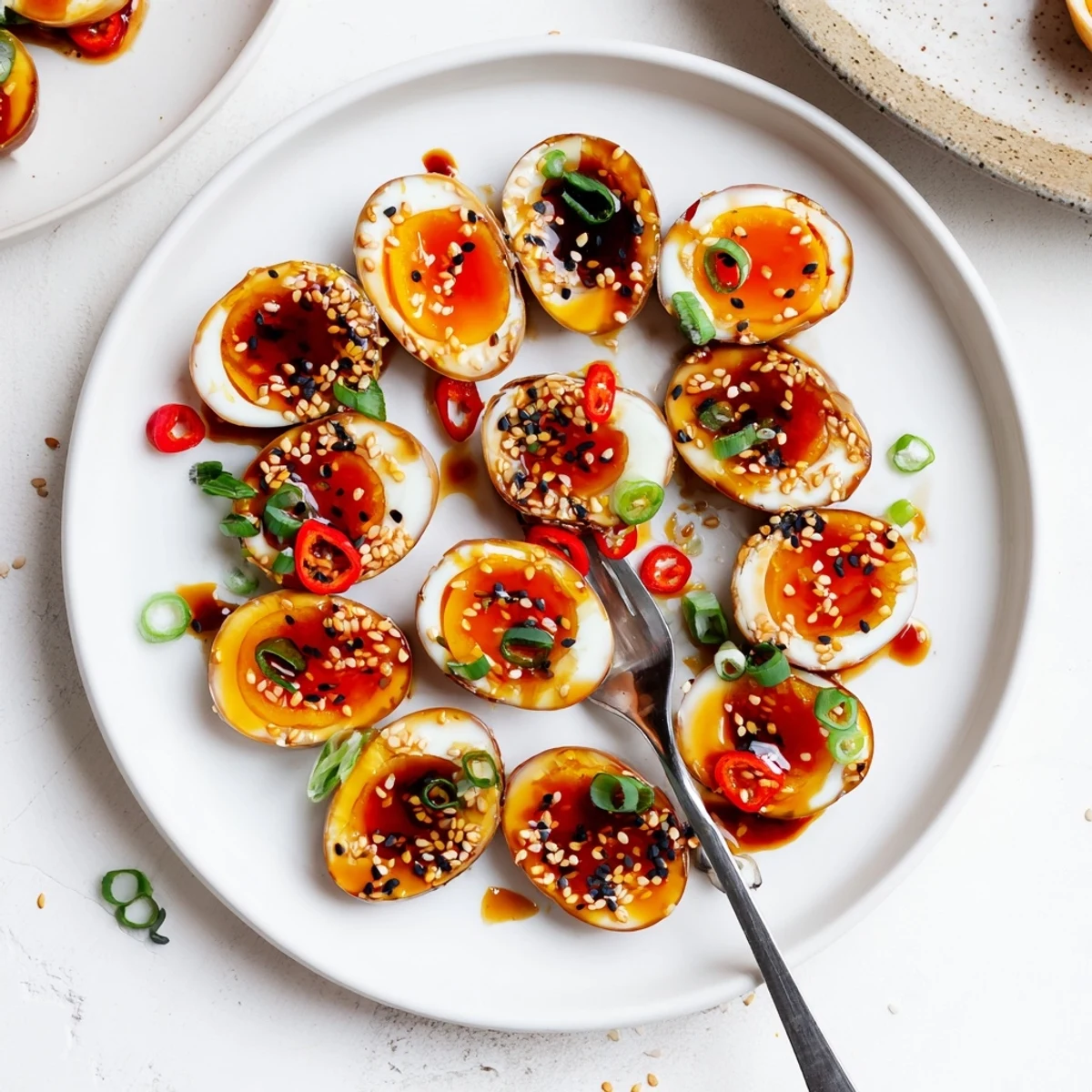
- Cut them in half to show off that beautiful yolk, spoon some of the marinade and garnishes over the top, and serve with rice or just eat them straight up.
 Save to Pinterest
 These became my go-to meal prep protein when I was working crazy hours and barely had time to breathe. Something about having them ready in the fridge made my whole week feel more manageable.
Getting The Perfect Boil
The difference between a 6-minute egg and a 7-minute egg is huge when you're marinating them. Too undercooked and they fall apart in the marinade, too overcooked and you lose that luxurious yolk. I've found that bringing the water to a boil first, then lowering the heat to a gentle simmer before adding the eggs, gives me the most consistent results every single time.
Customizing The Heat Level
Some days I want these eggs to pack a serious punch, other times I want them more mellow and sweet. If you're not sure about the spice level, start with just one chili pepper and taste the marinade before adding more. You can also use Korean gochugaru flakes instead of fresh chilies for a different kind of heat that's more smoky and earthy.
Serving Ideas That Go Beyond Plain
These eggs are incredibly versatile and can transform simple dishes into something special. I love them over ramen, tucked into banh mi, or even just on toast with avocado for breakfast.
- Try them chopped over fried rice with extra scallions
- Add them to a grain bowl with pickled vegetables
- Serve alongside kimchi for a complete Korean-style meal
 Save to Pinterest
 There's something deeply satisfying about opening the fridge and seeing a jar of these eggs pickling away, knowing you've got something delicious waiting for you whenever hunger strikes.
Recipe FAQs
- → How long should I boil the eggs?
-
Boil the eggs for 6–7 minutes to achieve jammy, runny yolks. This timing creates the perfect texture for absorbing the marinade while maintaining a creamy center.
- → Can I adjust the spice level?
-
Absolutely. Add more or fewer chili peppers according to your preference. For a mild version, omit the chilies entirely—the dish remains delicious without heat.
- → How long do marinated eggs last?
-
Store in the refrigerator for up to 3–4 days. The flavors continue developing over time, making them even more delicious on the second day.
- → Can I reuse the marinade?
-
Yes, you can reuse the marinade once. Boil it first to ensure food safety, then add freshly peeled eggs for another batch.
- → What should I serve with marinated eggs?
-
Enjoy them whole or halved as a snack, serve over steamed rice, add to noodle bowls, or slice into salads for extra protein and flavor.
- → Can I make this gluten-free?
-
Use gluten-free soy sauce or tamari in place of regular soy sauce. Always verify all ingredients meet your dietary needs.