
 Save to Pinterest
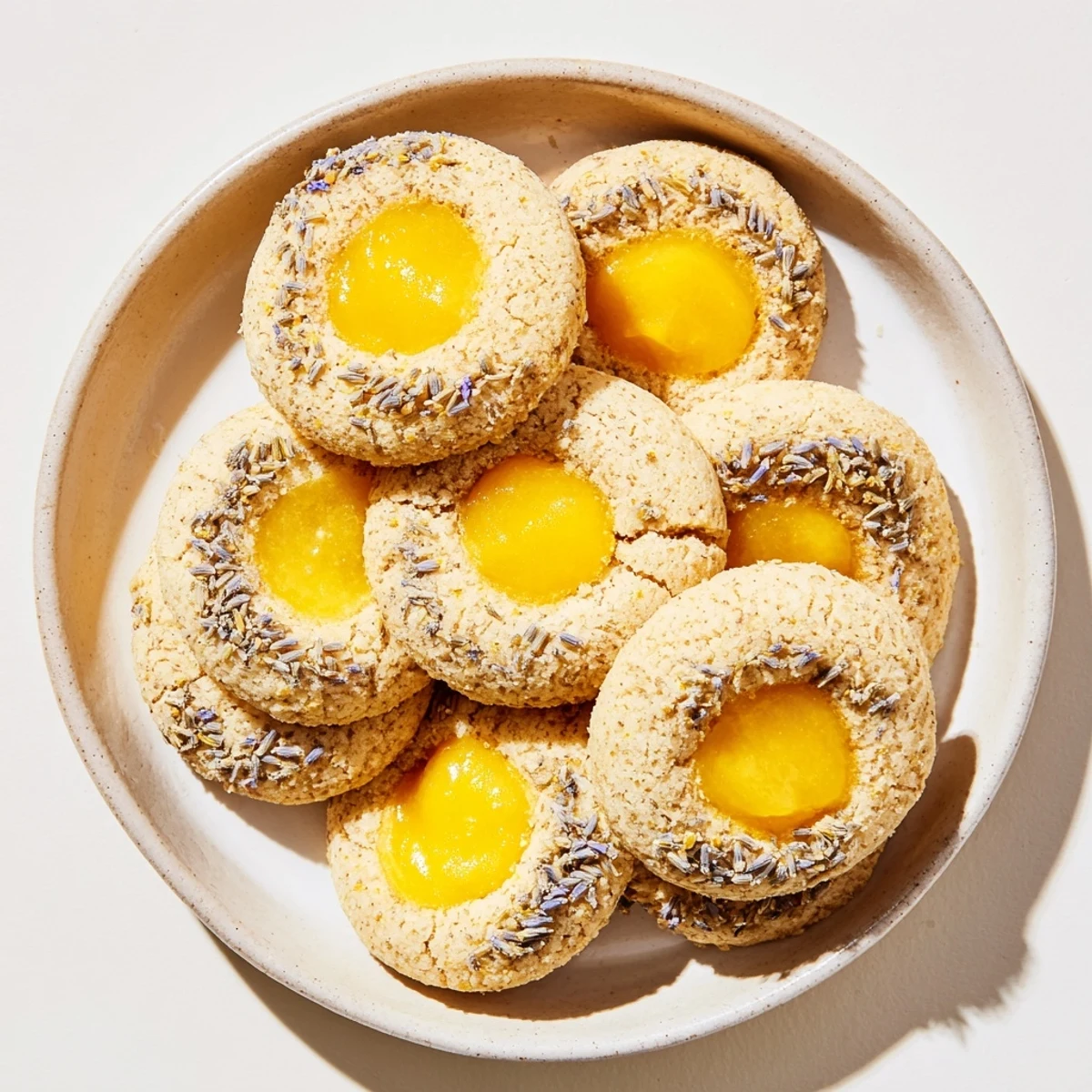
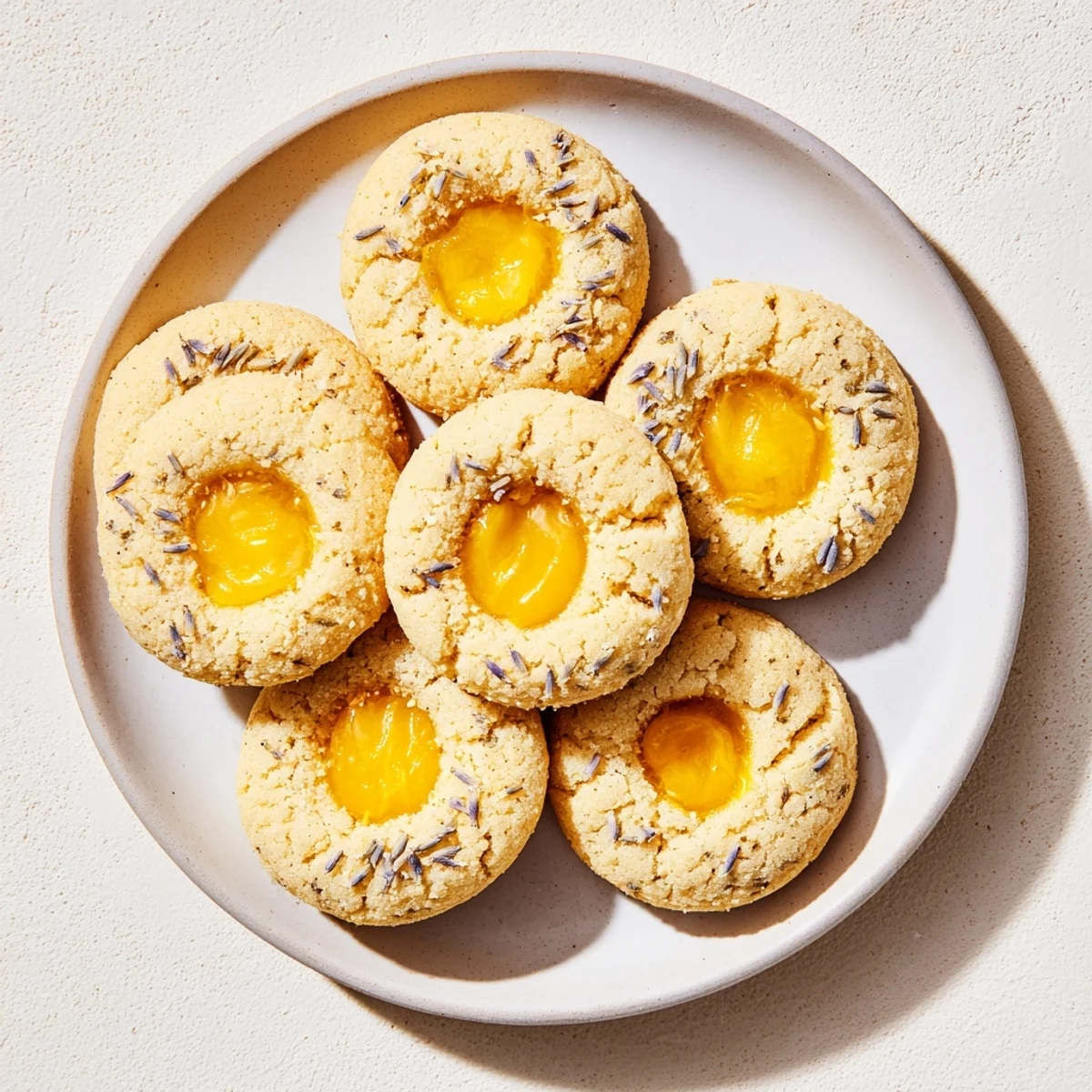
 These delicate thumbprint cookies combine the bright citrus notes of fresh lemon with the subtle floral aroma of culinary lavender. The buttery dough creates a tender cookie that pairs beautifully with the sweet-tart lemon curd filling.
Perfect for afternoon tea service, these elegant cookies require just 32 minutes from start to finish. The process involves creating a classic butter cookie dough, infusing it with lemon zest, juice, and finely chopped lavender buds. After the first bake, a well is pressed into each cookie and filled with luscious lemon curd before finishing with a quick return to the oven.
The result is a sophisticated treat that balances creamy richness, floral perfume, and zesty brightness. These cookies keep well for three days and can be customized with orange instead of lemon for a different citrus profile.
The way lavender hits you before you even see these cookies still makes me smile. My neighbor Sarah brought over a bundle from her garden last summer, and I stood there inhaling it like a person who had forgotten what calm smelled like. Those flowers sat on my counter for days, daring me to do something more interesting than sachets. That's when these thumbprints happened, entirely by happy accident.
I made three batches that first week, trying to get the lavender amount right because too much floral can taste like soap. My husband finally put his foot down when I handed him yet another warm cookie, asking if we were opening a bakery. Now they are the only cookie my mother requests specifically for her birthday, and she does not even like dessert.
Ingredients
- 2 cups all purpose flour: The foundation that holds all these delicate flavors together without weighing them down
- 1/2 teaspoon baking powder: Just enough lift to give these cookies their tender crumb without making them cakey
- 1/4 teaspoon salt: Enhances every other ingredient and keeps the sweetness from becoming cloying
- 1 cup unsalted butter room temperature: Cold butter creates dense cookies, so let this sit out for a full hour before starting
- 2/3 cup granulated sugar: Sweetens while letting the lavender and lemon remain the stars of the show
- 1 large egg yolk: Creates richness without making the dough too soft to hold its shape
- 2 teaspoons finely grated lemon zest: Use a microplane and avoid the white pith which brings bitterness
- 1 tablespoon fresh lemon juice: Adds brightness that cuts through the butter and wakes up your palate
- 1 teaspoon pure vanilla extract: Rounds out the floral notes and keeps everything grounded
- 1 tablespoon dried culinary lavender finely chopped: Pulse briefly in a spice grinder or chop with a knife so you do not bite into whole buds
- 2/3 cup prepared lemon curd: Homemade tastes incredible but a good quality jarred version works perfectly here
Instructions
- Preheat your oven:
- Set to 350 degrees and line two baking sheets with parchment paper so nothing sticks later
- Whisk the dry ingredients:
- Combine the flour, baking powder, and salt in a medium bowl, then set it aside while you work on the butter
- Cream the butter and sugar:
- Beat them together for 2 to 3 minutes until the mixture looks pale and fluffy like clouds
- Add the wet ingredients:
- Mix in the egg yolk, lemon zest, lemon juice, and vanilla until everything is fully incorporated
- Combine the dough:
- Gradually add the dry ingredients and mix just until you no longer see white streaks
- Fold in the lavender:
- Gently incorporate the chopped lavender so it is evenly distributed without overworking the dough
- Shape the cookies:
- Scoop rounded tablespoons of dough and roll them into balls, placing them 2 inches apart on your prepared baking sheets
- Create the thumbprint:
- Press your thumb gently into the center of each ball or use the back of a teaspoon to make a deep well
- First bake:
- Bake for 10 minutes, then remove from the oven and press the centers down again if they have puffed up
- Fill the centers:
- Spoon about half a teaspoon of lemon curd into each indentation, being careful not to overfill
- Final bake:
- Return to the oven for 2 more minutes until edges are barely golden and the curd is set
- Cool completely:
- Let them rest on the baking sheet for 5 minutes before moving to a wire rack to finish cooling
 Save to Pinterest
 My sister in law asked for the recipe after trying one at our holiday party last year. She made them for her book club and now those women ask for these cookies specifically every time it is her turn to host.
Making These Ahead
The dough balls freeze beautifully for up to three months if you flash freeze them on a baking sheet first then transfer to a container. Bake from frozen, adding one extra minute to the initial baking time.
Lavender Substitutions
If floral flavors are not your thing, dried rosemary creates an equally sophisticated version that pairs surprisingly well with lemon. The herbaceous notes have the same calming effect without the perfume quality that some people find overwhelming.
Serving Suggestions
These cookies shine brightest when served alongside a cup of Earl Grey or a delicate herbal tea. The citrus and lavender notes complement the bergamot in the tea beautifully.
- Dust with powdered sugar right before serving for a snowy effect
- Serve slightly warm if the filling has been refrigerated
- Pair with unsweetened whipped cream to balance the tangy curd
 Save to Pinterest
 These have become my go to when I need something that looks impressive but does not require me to be a pastry chef. Every time someone takes that first bite and looks up surprised, I remember Sarah handing me that bundle of lavender.
Recipe FAQs
- → Can I use fresh lavender instead of dried?
-
Fresh lavender contains more moisture and can make the dough soggy. Stick with dried culinary lavender, which has been properly cured to concentrate the essential oils and provide consistent flavor without excess water content.
- → What can I use instead of lemon curd?
-
Orange curd, raspberry jam, apricot preserves, or even a dark chocolate ganache work beautifully as alternative fillings. Choose something that complements the floral lavender notes without overpowering them.
- → Why do I need to reinforce the thumbprint after the first bake?
-
The cookies puff slightly during baking, which can cause the indentation to shallow. Gently pressing again after removing them from the oven ensures you have enough space to hold a generous amount of filling without it overflowing during the second bake.
- → How do I know when the cookies are done?
-
Look for very lightly golden edges—the tops should remain pale. Overbaking will result in dry, crumbly cookies rather than the desired tender, buttery texture. The second bake is just 2 minutes to set the curd, not cook the dough further.
- → Can I freeze the dough or baked cookies?
-
Yes! Scoop the dough balls and freeze them on a baking sheet before transferring to a freezer bag. Bake from frozen, adding 1-2 minutes to the initial bake time. Baked cookies freeze well for up to 3 months—thaw at room temperature before serving.
- → What's the best way to chop lavender buds?
-
Use a sharp knife and a cutting board, or pulse briefly in a spice grinder. Avoid over-processing into powder—you want small, visible pieces that distribute evenly throughout the dough for bursts of floral flavor in each bite.