
 Save to Pinterest
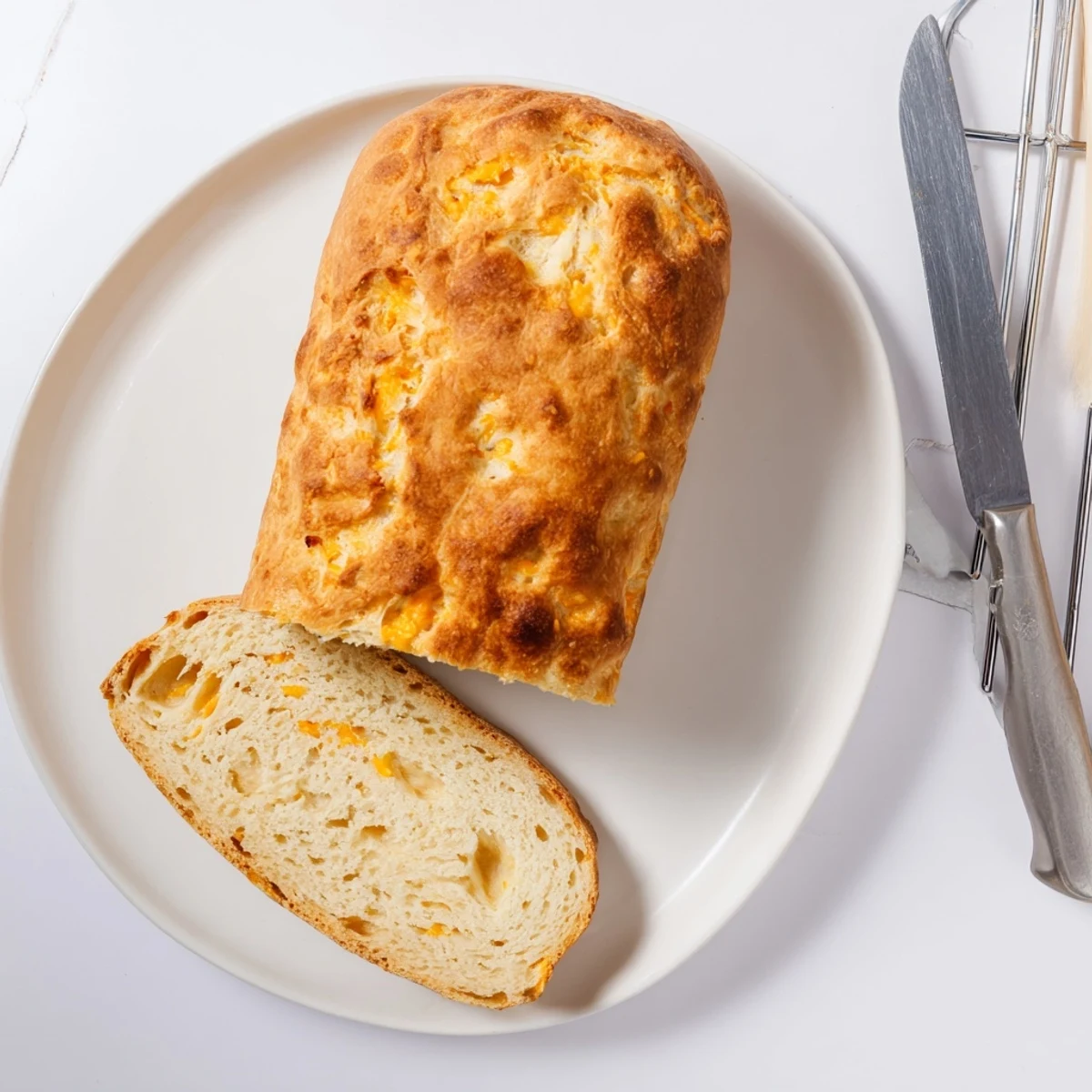
 This effortless cheesy bread comes together with just five simple ingredients. The dough rises slowly at room temperature, developing deep flavor and characteristic bubbles throughout the tender crumb. Baking in a preheated Dutch oven creates a professional bakery crust with beautiful golden color.
Sharp cheddar melts throughout the loaf, creating savory pockets of cheese in every bite. The finished loaf makes exceptional grilled cheese sandwiches, elevates your morning toast, or pairs beautifully with a warm bowl of soup. Since there's no kneading required, even beginners can achieve bakery-style results.
Customize with fresh herbs like rosemary or thyme, add chili flakes for warmth, or swap in smoked cheese for a deeper flavor profile. The dough can also be prepared ahead and kept in the refrigerator for up to 24 hours before baking.
The rain had been coming down for three straight days when I finally pulled this bread out of the oven, filling the entire kitchen with this incredible sharp cheese aroma that had my neighbor knocking on my door within minutes.
My dad, whos been baking bread every Sunday for thirty years, actually stopped mid chew when he tried this and asked me twice if Id really made it myself.
Ingredients
- 3 cups all purpose flour: This forms the foundation and gives the bread structure while staying tender
- 1½ teaspoons salt: Dont skip this even with the salty cheese it balances everything beautifully
- ½ teaspoon instant yeast: A small amount does all the work during that long rise time
- 1½ cups sharp cheddar cheese grated: The sharper the better here because it mellows during baking
- 1¼ cups lukewarm water: Should feel like bath temperature not hot or the yeast will work too fast
Instructions
- Mix the dry foundation:
- Whisk together your flour salt and instant yeast in a large bowl until everything is evenly distributed
- Add the cheese:
- Toss in your grated cheddar and mix it through so every bit of dough gets those cheesy pockets
- Bring it together:
- Pour in the lukewarm water and stir with a wooden spoon until you have a shaggy sticky dough
- Let it work:
- Cover the bowl tightly and let it rise at room temperature for 3 to 4 hours until its doubled with bubbles on the surface
- Heat your pot:
- Preheat your oven to 450°F and put your Dutch oven inside to heat for at least 30 minutes
- Shape the loaf:
- Turn the dough onto a floured surface shape it into a round and place it on parchment paper
- Rest again:
- Cover with a towel and let it rest 20 to 30 minutes while your oven finishes heating
- Start the bake:
- Carefully lift the dough with parchment into your hot pot cover and bake for 30 minutes
- Create the crust:
- Remove the lid and bake another 10 to 15 minutes until deep golden and hollow when tapped
- Cool completely:
- Let it rest on a wire rack for at least 30 minutes before you slice into it
 Save to Pinterest
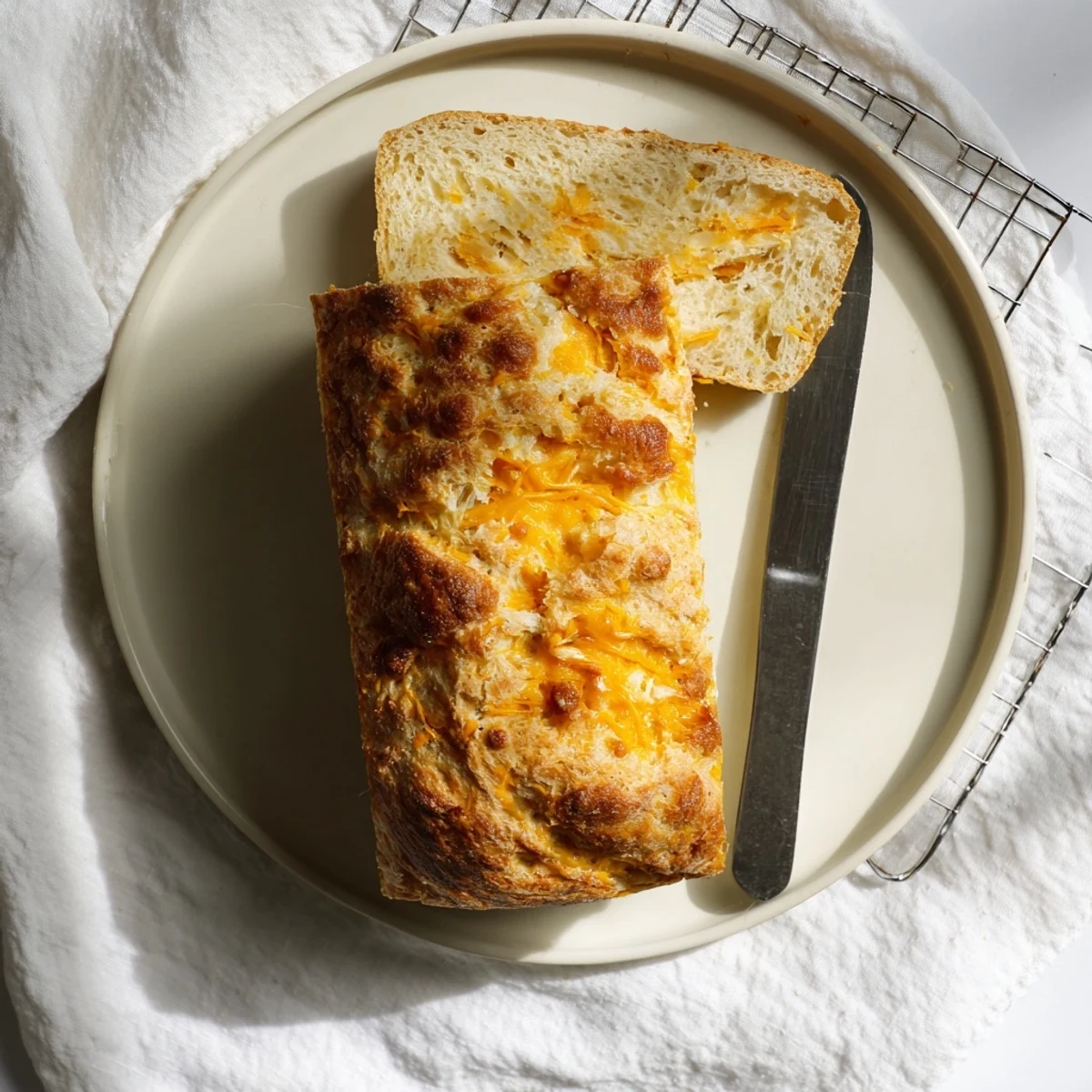
 We ate half the loaf standing right there at the counter with just butter melting into the warm slices and I knew this would be my forever lazy day bread.
Getting Creative with Add Ins
Ive tried mixing fresh herbs right into the dough and chives are absolutely spectacular here but rosemary brings this whole cozy dinner vibe.
Making It Your Own
Swapping half the cheddar for smoked gouda creates this incredible depth that pairs beautifully with tomato soup or chili on cold nights.
Storing and Freezing Tips
This bread stays surprisingly fresh for two days wrapped tightly at room temperature but honestly it rarely lasts that long in my house.
- Slice before freezing and you can toast individual pieces straight from frozen
- Revive day old bread with a quick sprinkle of water and 10 minutes in a warm oven
- The cheese keeps the crumb moist longer than plain bread so dont worry about it drying out too fast
 Save to Pinterest
 Theres something so satisfying about pulling a gorgeous crusty loaf from the oven knowing you barely had to work for it.
Recipe FAQs
- → Do I need special equipment to make this?
-
A Dutch oven or heavy oven-safe pot with lid is essential for creating the steam environment that produces the crispy, crackling crust. The pot must withstand 450°F heat. Parchment paper makes transferring the dough safely, but isn't strictly required if you're confident handling hot cookware.
- → Can I use other cheeses instead of cheddar?
-
Absolutely. Sharp cheddar provides the best flavor punch, but grated Gruyère, Swiss, pepper Jack, or smoked Gouda work beautifully. Avoid fresh mozzarella or very soft cheeses as they release too much moisture. For best results, grate your own cheese rather than using pre-shredded varieties which contain anti-caking agents.
- → Why does the dough need to rise for 3–4 hours?
-
The extended fermentation allows yeast to develop flavor and create the signature airy crumb structure. This slow rise produces bubbles throughout the dough and yields better texture than quick-rise methods. The timing is flexible—let it go longer in a cool kitchen, or speed it up slightly in a warmer spot.
- → How do I know when it's done baking?
-
The crust should be deep golden brown, often with darker spots near the bottom. The most reliable test is tapping the bottom of the loaf—it should sound hollow rather than dense. An instant thermometer inserted into the center should read 200–205°F. Underbaked centers will feel gummy.
- → Can I add herbs or other mix-ins?
-
Fresh herbs like rosemary, thyme, or chives can be added with the dry ingredients. Minced garlic, caramelized onions, or cooked bacon work well too. Limit mix-ins to about ½ cup total to maintain proper dough structure. Anything watery like fresh tomatoes should be avoided.
- → How should I store leftovers?
-
Wrap tightly in plastic or store in an airtight container at room temperature for up to 2 days. Beyond that, the crust will soften. For longer storage, slice and freeze in freezer bags for up to 3 months. Reheat frozen slices in a 350°F oven for 5–10 minutes to recrisp the crust.