
 Save to Pinterest
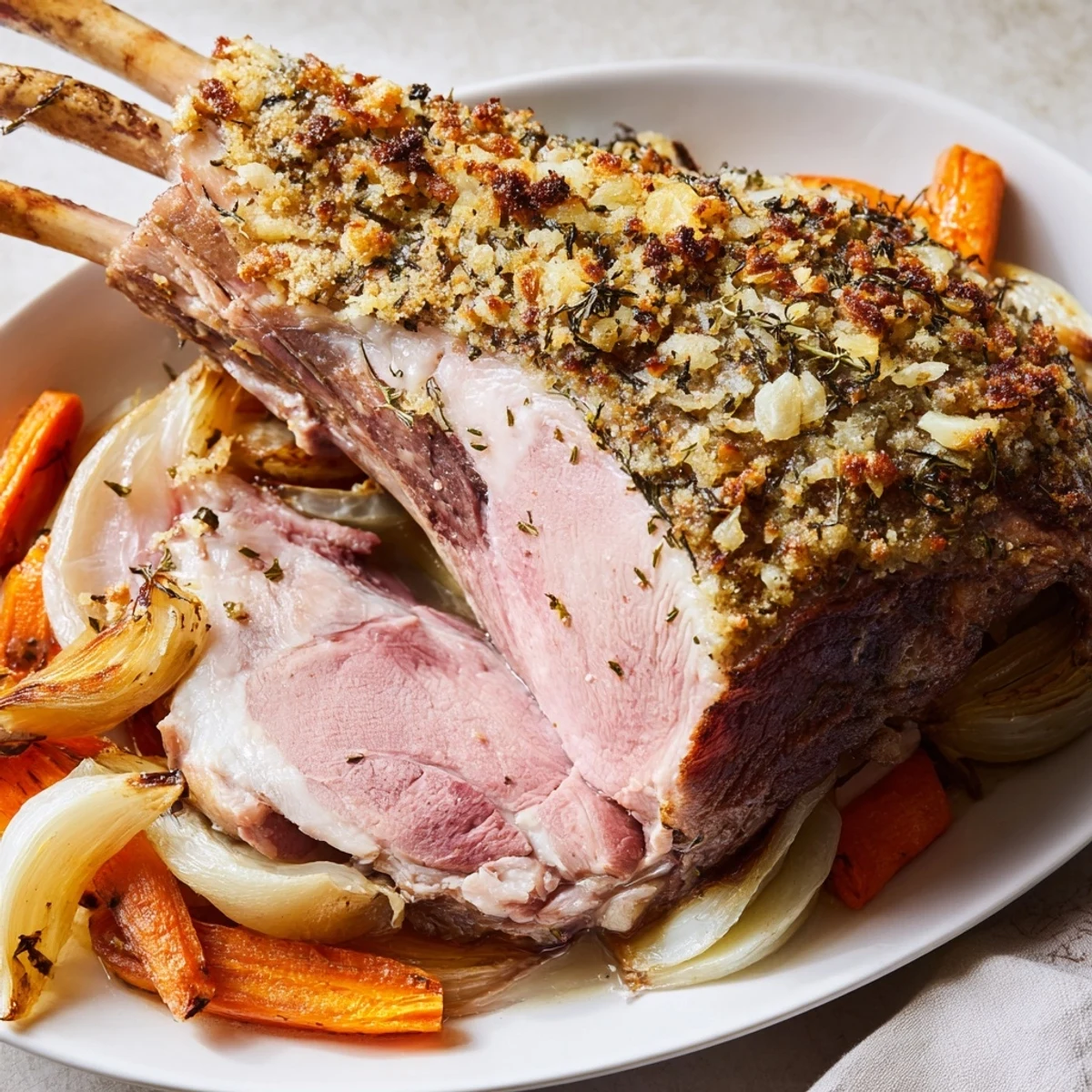
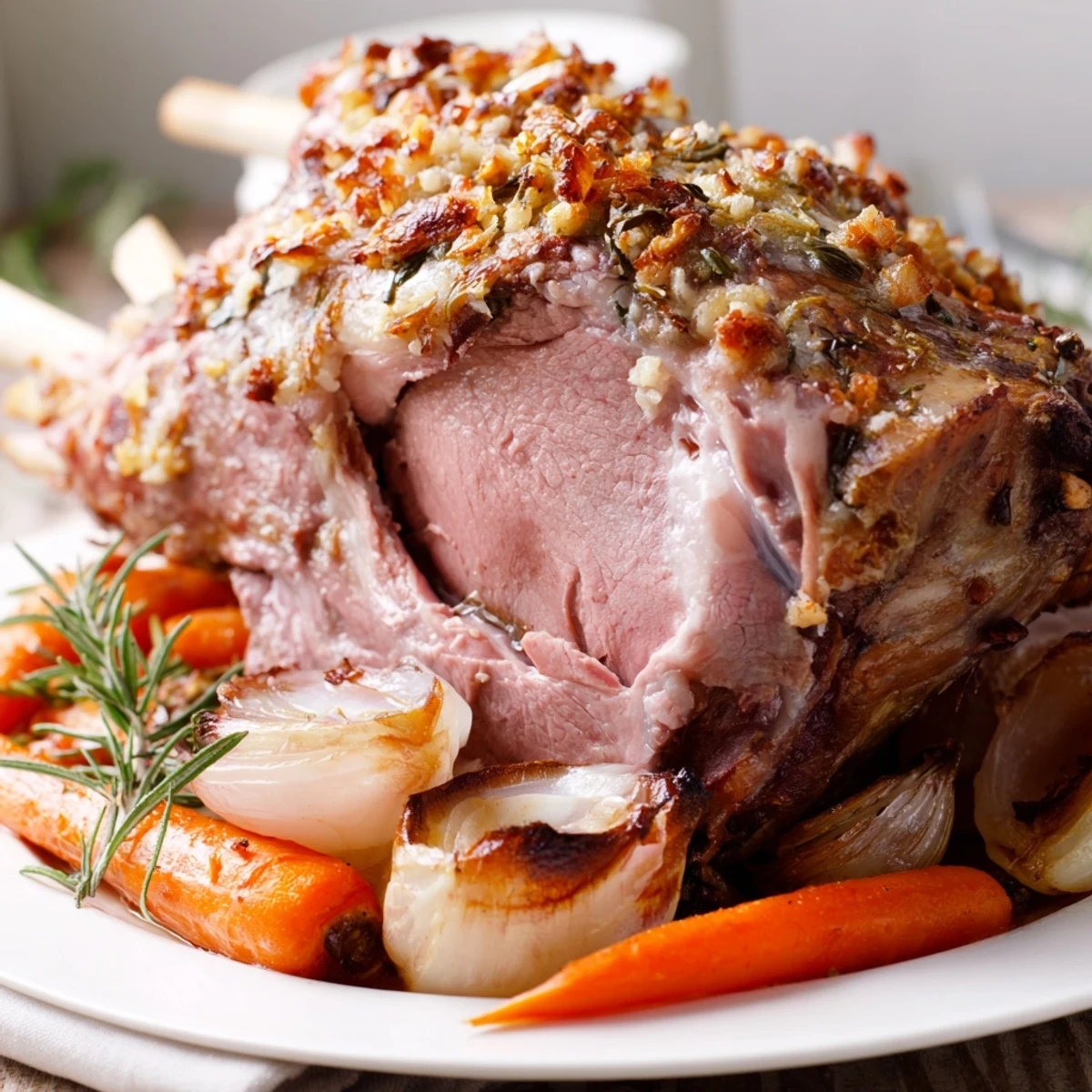
 This dish highlights a succulent lamb leg marinated with olive oil, garlic, fresh rosemary, sea salt, pepper, and lemon zest. The lamb is roasted slowly atop a bed of aromatic vegetables, developing a golden crust and tender interior. Resting the meat post-roast ensures juicy slices infused with fragrant herbs, perfect for festive dinners or relaxed family gatherings.
There's something almost ceremonial about bringing a whole leg of lamb to the table, the way it commands attention and makes everyone lean in a little closer. I first attempted this for a cramped apartment dinner party, nervously checking the oven temperature while my friends pretended not to notice my anxious kitchen pacing. The smell that filled that small space was nothing short of revelatory—earthy, garlicky, with rosemary doing something magical to the air itself. When we finally sat down to eat, the lamb was perfectly pink and juicy, and suddenly my modest kitchen felt like a Mediterranean villa.
Last Easter, my sister requested I make this instead of our usual ham, and honestly it has completely changed our family tradition forever. My dad, who is usually pretty skeptical about anything deviating from the classics, went back for thirds without saying a word. The vegetables underneath become caramelized and impossibly flavorful, almost like a secret side dish that nobody expects until they taste it.
Ingredients
- Lamb leg: A bone-in leg stays juicier and more flavorful during the long roasting time, plus the bone adds incredible depth to any pan juices you might want to use later
- Olive oil: This helps the seasoning adhere and creates that beautiful golden crust we are all after
- Fresh garlic: Minced finely so it distributes evenly without burning during roasting
- Fresh rosemary: The woody stems can go right into the pan while the chopped leaves work into the marinade
- Coarse sea salt: Larger crystals create tiny bursts of salty flavor and help form that addictive exterior crunch
- Lemon zest: Brightens everything and cuts through the richness of the meat perfectly
- Vegetables for roasting bed: These elevate the lamb for even cooking and create a natural rack while catching all those precious drippings
Instructions
- Prepare the lamb:
- Pat the leg completely dry with paper towels, then use a sharp knife to make small shallow incisions all over the surface—this lets the marinade work its way deep into the meat
- Mix the marinade:
- Combine olive oil, minced garlic, chopped rosemary, salt, pepper, and lemon zest in a small bowl until it forms a paste-like consistency
- Season generously:
- Rub the mixture thoroughly over the entire lamb, really working it into those incisions you made for maximum flavor penetration
- Create your roasting bed:
- Arrange thickly sliced onions, chunked carrots, and celery pieces in a large roasting pan to create a natural vegetable rack
- Initial high heat:
- Place the lamb on top of the vegetables and roast at high temperature for 20 minutes to develop a gorgeous golden crust that seals in juices
- Slow roasting:
- Reduce the temperature and continue roasting, basting occasionally with the pan juices until it reaches your desired doneness
- The crucial rest:
- Let it rest under a tent of foil for at least 20 minutes so all those juices redistribute throughout the meat instead of running out onto your cutting board
 Save to Pinterest
 The first time I made this for a dinner party, I was so nervous about overcooking it that I pulled it out way too early. My lovely, honest friend took one bite and gently suggested maybe it could use another 10 minutes. We all laughed, put it back in, and learned that sometimes you just have to trust the process and the thermometer.
Temperature Guide
Medium-rare hits that perfect sweet spot at 55 to 60 degrees internally, with a beautiful pink center and incredibly tender texture. If you have guests who prefer medium, aim for 65 degrees, but remember that well-done lamb tends to dry out and lose that luxurious mouthfeel that makes this dish so special.
Make Ahead Strategy
You can prepare the marinade and rub it all over the lamb up to a day ahead, then cover and refrigerate until you are ready to roast. The extra time actually helps the flavors penetrate deeper into the meat, so it is a brilliant move when you are hosting and want to minimize last-minute kitchen stress.
Serving Suggestions
Those roasted vegetables from the bottom of the pan become absolutely incredible—caramelized, lamb-infused, and worth every bit of effort. Serve alongside some roasted potatoes and maybe a bright green salad to cut through the richness.
- Mint jelly or a simple tzatziki sauce makes an excellent condiment on the side
- A medium-bodied red wine like a Rioja or Syrah pairs beautifully with the robust flavors
- Cover any leftovers tightly and they will keep brilliantly for sandwiches throughout the week
 Save to Pinterest
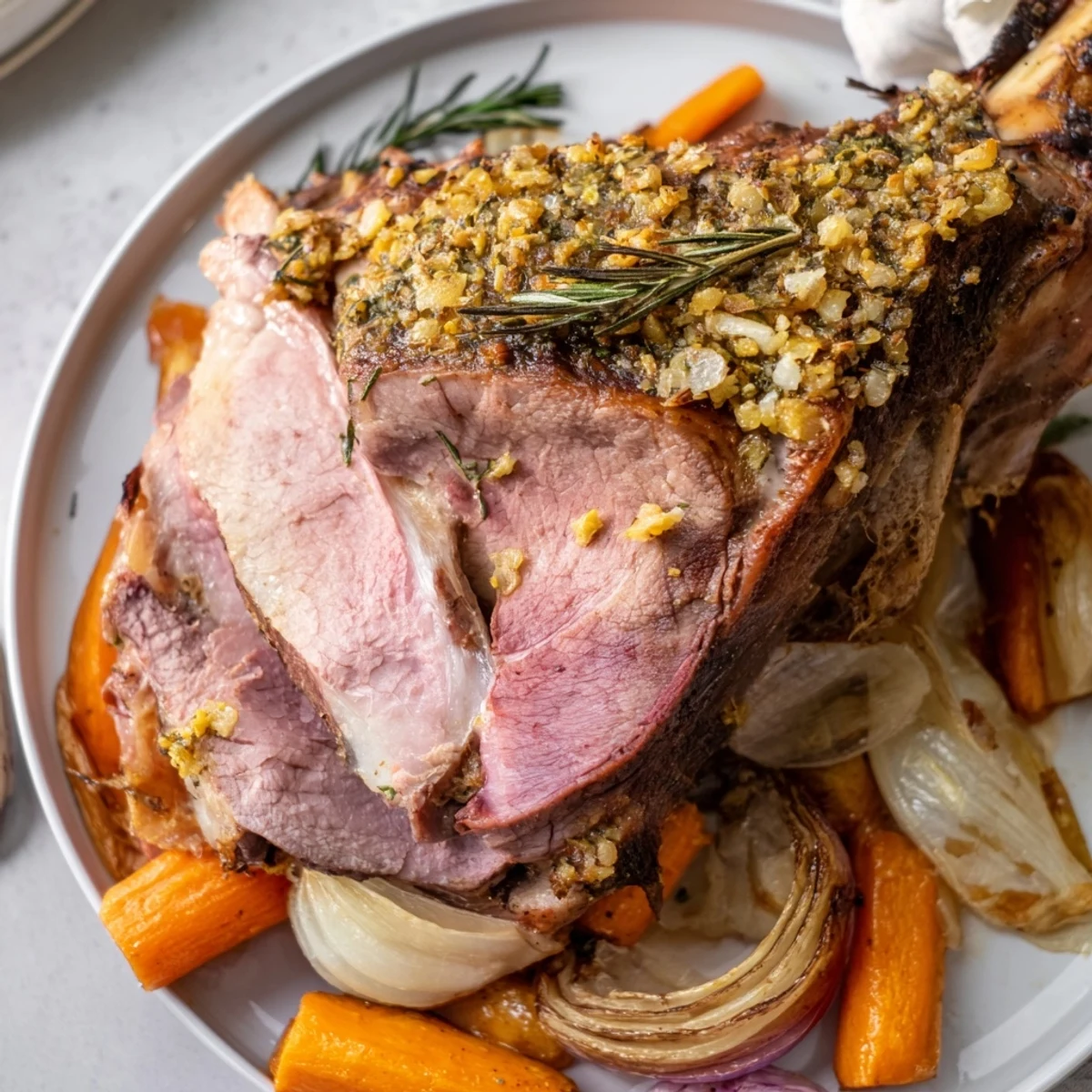
 There is nothing quite like the satisfaction of carving a perfectly roasted leg of lamb at the table, watching everyone's eyes light up as that first juicy slice hits their plate.
Recipe FAQs
- → How do I know when the lamb leg is perfectly cooked?
-
Use a meat thermometer to check the internal temperature; 55–60°C (130–140°F) indicates medium-rare, while 65°C (150°F) is medium.
- → Can I add vegetables to roast with the lamb?
-
Yes, placing onions, carrots, and celery beneath the lamb creates a flavorful bed and complements the meat during roasting.
- → What is the best way to prepare the marinade?
-
Combine olive oil, minced garlic, chopped rosemary, sea salt, pepper, and lemon zest, then rub thoroughly over the lamb, pushing into small incisions for deeper flavor.
- → How long should the lamb rest after roasting?
-
Rest the lamb loosely covered with foil for about 20 minutes to allow juices to redistribute for more tender and moist meat.
- → Are there suggestions for serving this lamb dish?
-
Serve alongside roasted potatoes or a fresh green salad for a balanced and satisfying Mediterranean-style meal.