
 Save to Pinterest
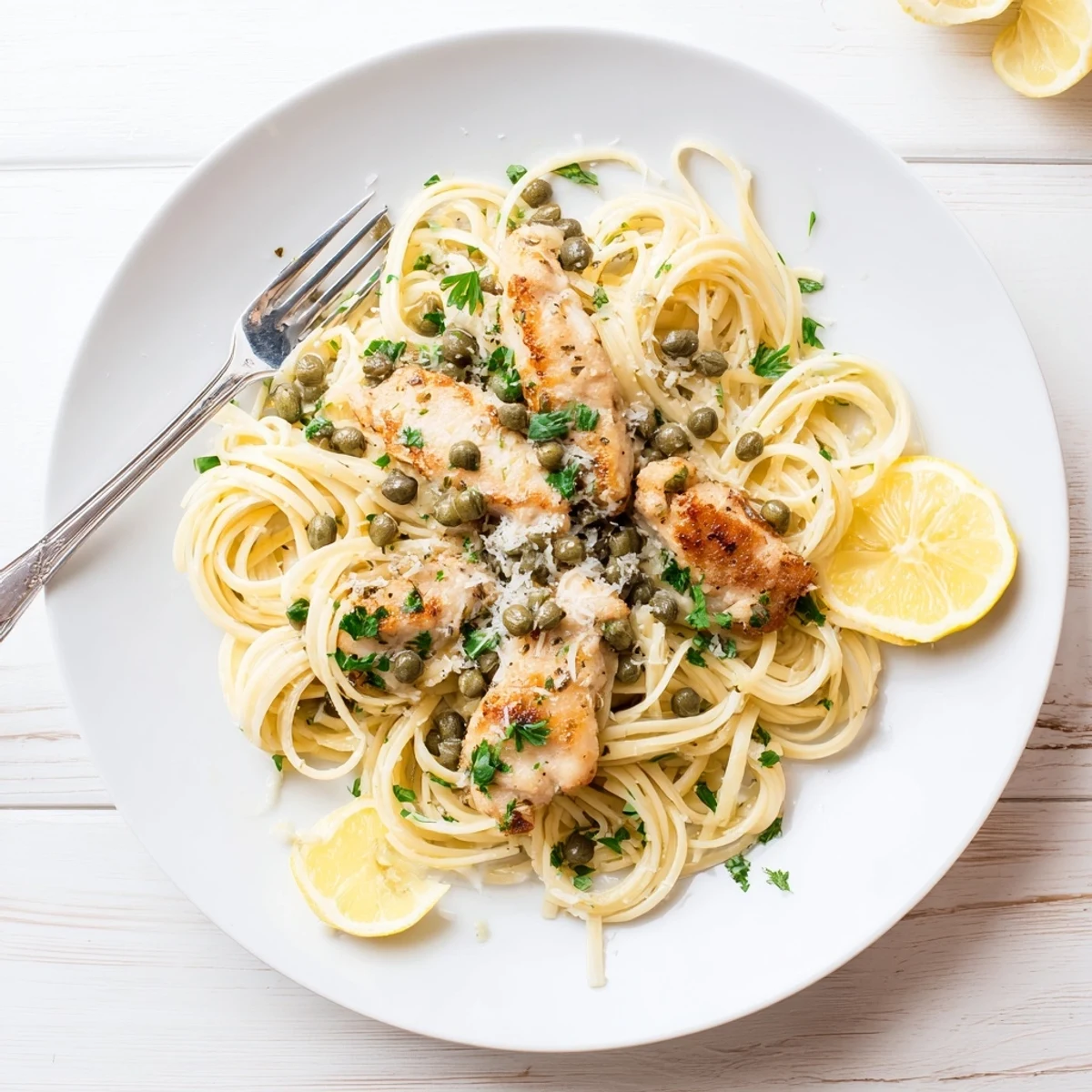
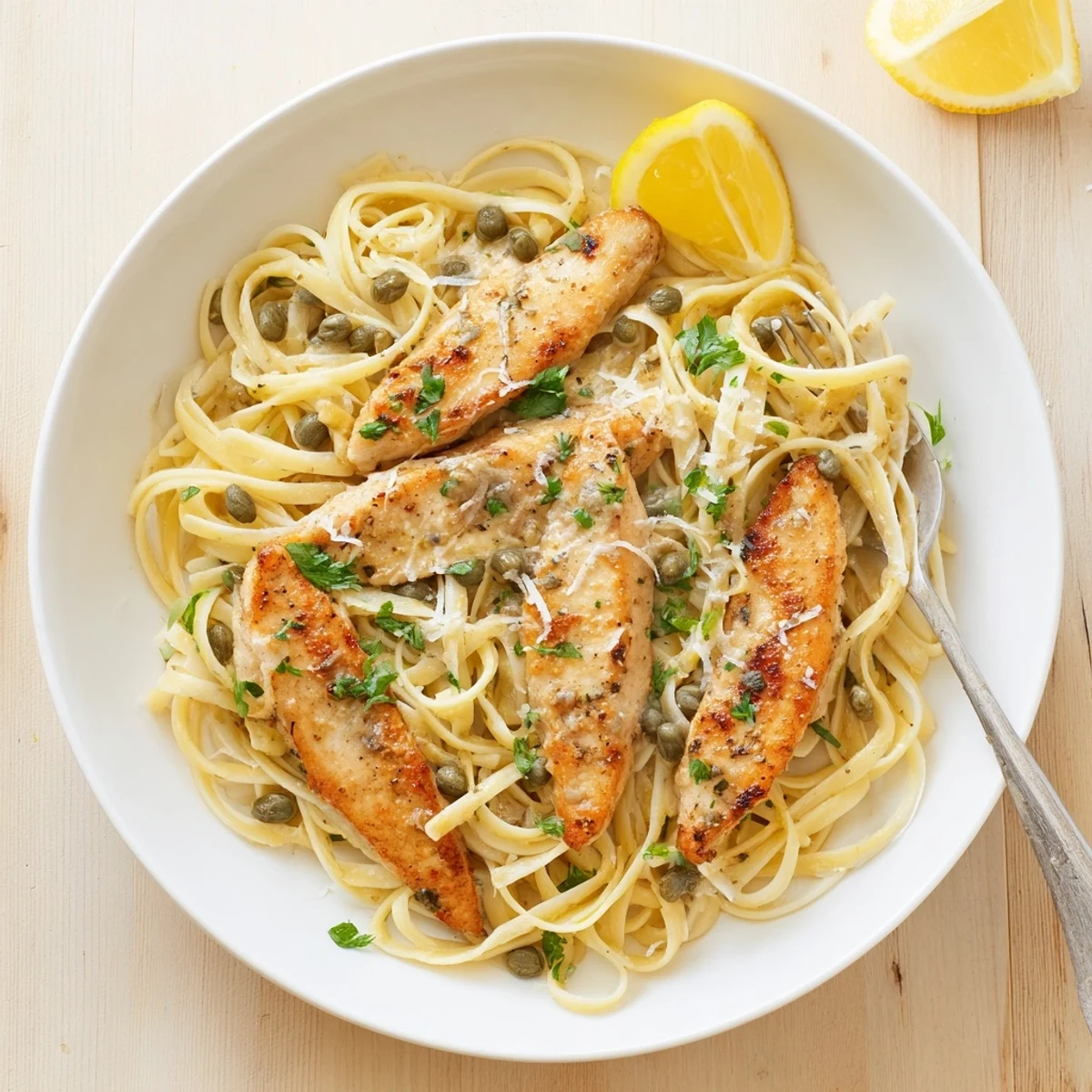
 This Italian-American classic combines golden pan-seared chicken with a vibrant lemon butter sauce studded with briny capers. The dish comes together in just 40 minutes, making it perfect for weeknight dinners yet elegant enough for entertaining. Thin chicken cutlets cook quickly and stay tender, while the white wine and lemon create a silky sauce that clings beautifully to al dente linguine.
The first time I made chicken piccata, I accidentally used way too much capers and my husband made a face that said everything. Now I have learned that balance is everything with those briny little buds. This pasta version came about on a Tuesday when I wanted something bright but needed to stretch the protein for unexpected guests. The lemon hit differently that night, and suddenly our regular weeknight rotation had a new star.
Last spring my sister came over exhausted from a new job, and I made this while she sat at the counter telling me about her day. The smell of garlic hitting olive oil made her stop mid sentence and ask what was happening. We ate standing up in the kitchen because neither of us wanted to bother with plates, and she asked for the recipe before she even finished her first bite.
Ingredients
- 2 large boneless skinless chicken breasts: Slice these horizontally into thin cutlets so they cook quickly and evenly, which also means more surface area for that golden flour crust
- Salt and freshly ground black pepper: Season generously on both sides of the chicken since the flour needs flavor too
- 1/2 cup all purpose flour: This creates that light coating that helps the sauce cling to the chicken while keeping it tender inside
- 12 oz linguine or spaghetti: Long strands catch the lemon butter sauce beautifully, though any pasta shape works in a pinch
- 3 tbsp olive oil: Use a neutral oil with a decent smoke point since you are searing over medium high heat
- 2 tbsp unsalted butter: This adds richness to balance the sharp lemon and salty capers
- 3 cloves garlic: Minced finely so it releases its aroma quickly without burning in the hot pan
- 1/2 cup dry white wine: Pinot Grigio or Sauvignon Blanc work beautifully here, but whatever you have open will do
- 3/4 cup low sodium chicken broth: Low sodium is crucial because the capers and Parmesan already bring plenty of salt
- 1/4 cup freshly squeezed lemon juice: This is the star of the show, so use fresh lemons and strain out any seeds
- 3 tbsp capers: Drain these well and give them a quick rinse if you find them too salty straight from the jar
- 1/4 cup chopped fresh parsley: This adds a fresh pop of color and a mild herbaceous note that cuts through the richness
- 1/4 cup grated Parmesan cheese: Use freshly grated if possible, since pre grated cheese has additives that prevent it from melting smoothly
- Lemon slices: A simple garnish that makes the plate look like something special
Instructions
- Get your pasta water going:
- Bring a large pot of salted water to a boil and cook the pasta until al dente, then drain but remember to reserve that half cup of pasta water before you pour everything else down the sink
- Prep the chicken:
- Slice each chicken breast horizontally to create thin cutlets, then season both sides generously with salt and pepper
- Dredge the chicken:
- Press each chicken piece into the flour, shaking off any excess so you have just a light coating
- Sear the chicken:
- Heat 2 tablespoons olive oil in a large skillet over medium high heat and cook the chicken in batches for 3 to 4 minutes per side until golden and cooked through, then remove to a plate and cover loosely with foil
- Build the sauce base:
- Add the remaining olive oil and butter to the same skillet, toss in the garlic, and let it cook for just 30 seconds until fragrant
- Deglaze the pan:
- Pour in the white wine and use your wooden spoon to scrape up all those browned bits from the bottom of the pan, then let it simmer for 2 minutes
- Add the remaining sauce ingredients:
- Stir in the chicken broth, lemon juice, and capers, then let everything simmer for 3 to 4 minutes until slightly reduced
- Bring it all together:
- Return the chicken to the skillet and let it simmer for 2 minutes, spooning that sauce over the top
- Combine with pasta:
- Add the drained pasta, parsley, and Parmesan to the skillet and toss everything together, adding that reserved pasta water as needed to create a silky sauce that clings to every strand
- Serve it up:
- Plate immediately with extra Parmesan and those lemon slices if you want to make it look fancy
 Save to Pinterest
 My friend came over recently and mentioned she never orders piccata at restaurants because she is afraid she will mess up the balance at home. We made this together with the windows open and music playing, and I watched her face light up when she tasted that first bite. She texted me the next day that she made it for her family and her kids asked for seconds, which she said never happens with new recipes.
Choosing the Right Wine
I used to stress about buying special wine for cooking, but a decent bottle from the grocery store works perfectly here. The wine does not have to be expensive, just something you would actually drink. I keep a few boxes of Pinot Grigio in the pantry specifically for recipes like this, and nobody has ever complained about the difference.
Getting That Perfect Sauce Consistency
The secret to restaurant quality sauce is knowing when to stop reducing the liquid. You want it thick enough to coat a spoon but still pourable. I lift my wooden spoon and watch how the sauce drips off, and if it coats the back without running right off, I know it is ready. That pasta water is your safety net if things get too thick too fast.
Making It Ahead
You can slice and dredge the chicken up to a day in advance, just keep it layered between parchment paper in the refrigerator. The sauce comes together so quickly that I prefer to make it fresh, but you can mince the garlic and measure out all your ingredients beforehand. Pasta water does not save well, so that step has to happen right before serving.
- If you are making this for a crowd, double the sauce but keep the chicken amount the same
- Leftovers reheat surprisingly well with a splash of broth to loosen the sauce
- The flour on the chicken will thicken the sauce as it sits, so add more liquid when reheating
 Save to Pinterest
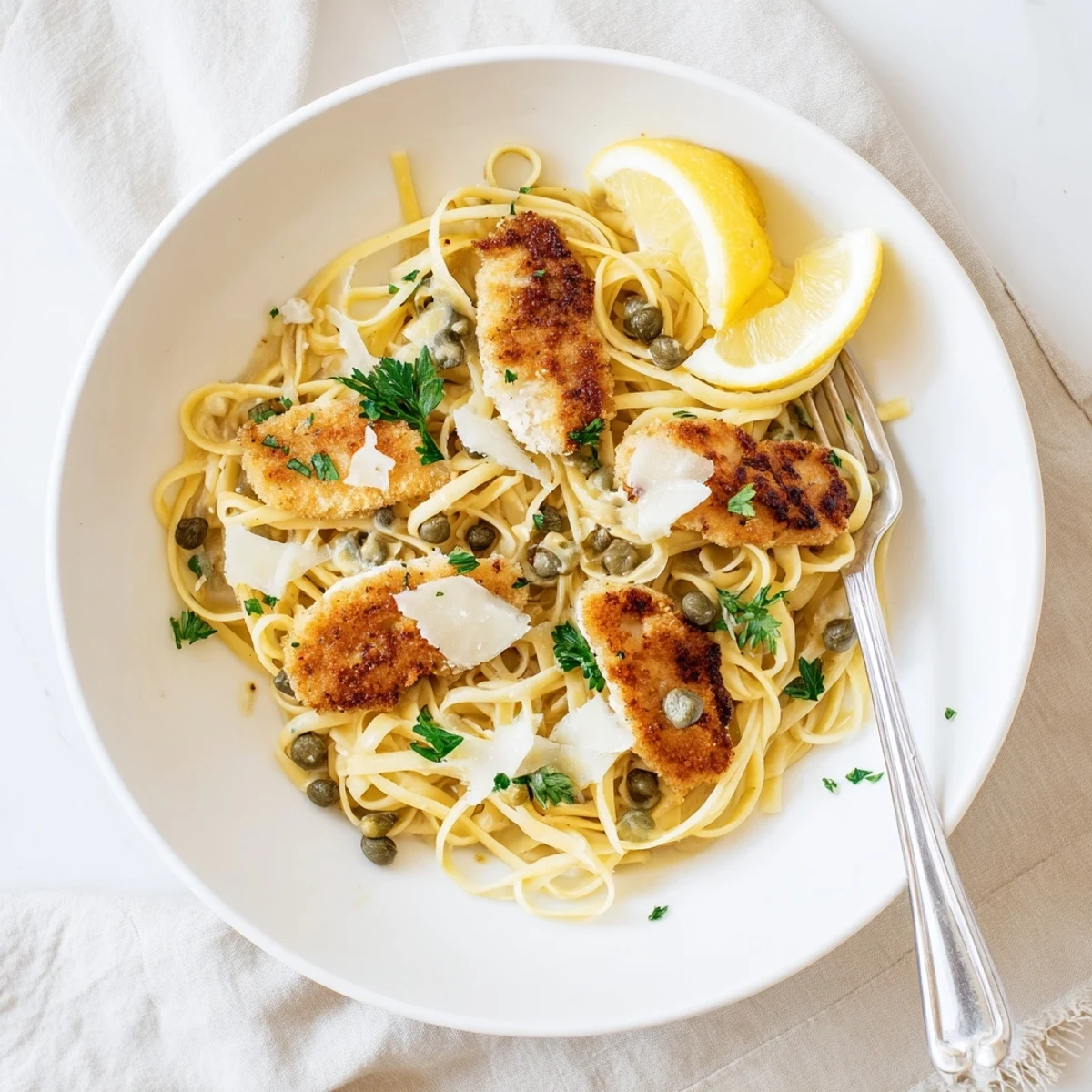
 There is something so satisfying about a dish that looks impressive but comes together on a random Tuesday night. This pasta has become my go to when I want to make dinner feel like an occasion without actually making a fuss.
Recipe FAQs
- → What makes piccata sauce unique?
-
Piccata sauce combines lemon juice, white wine, capers, and butter to create a bright, tangy pan sauce. The briny capers add distinctive pops of flavor that balance the acidity of fresh lemon.
- → Can I use chicken thighs instead of breasts?
-
Absolutely. Boneless skinless chicken thighs work wonderfully and stay juicy during cooking. Adjust cooking time slightly to ensure thighs reach 165°F internally.
- → What wine works best in this dish?
-
Dry white wines like Pinot Grigio, Sauvignon Blanc, or crisp Chardonnay work beautifully. Avoid sweet wines as they'll alter the sauce's balance.
- → How do I prevent the sauce from separating?
-
Keep heat at medium-low when adding butter and lemon. Don't let the sauce boil vigorously after adding dairy. Whisk continuously while incorporating butter.
- → Can I make this gluten-free?
-
Use gluten-free flour for dredging and swap regular pasta for your favorite gluten-free pasta. Brown rice or quinoa pasta hold up well in this sauce.