
 Save to Pinterest
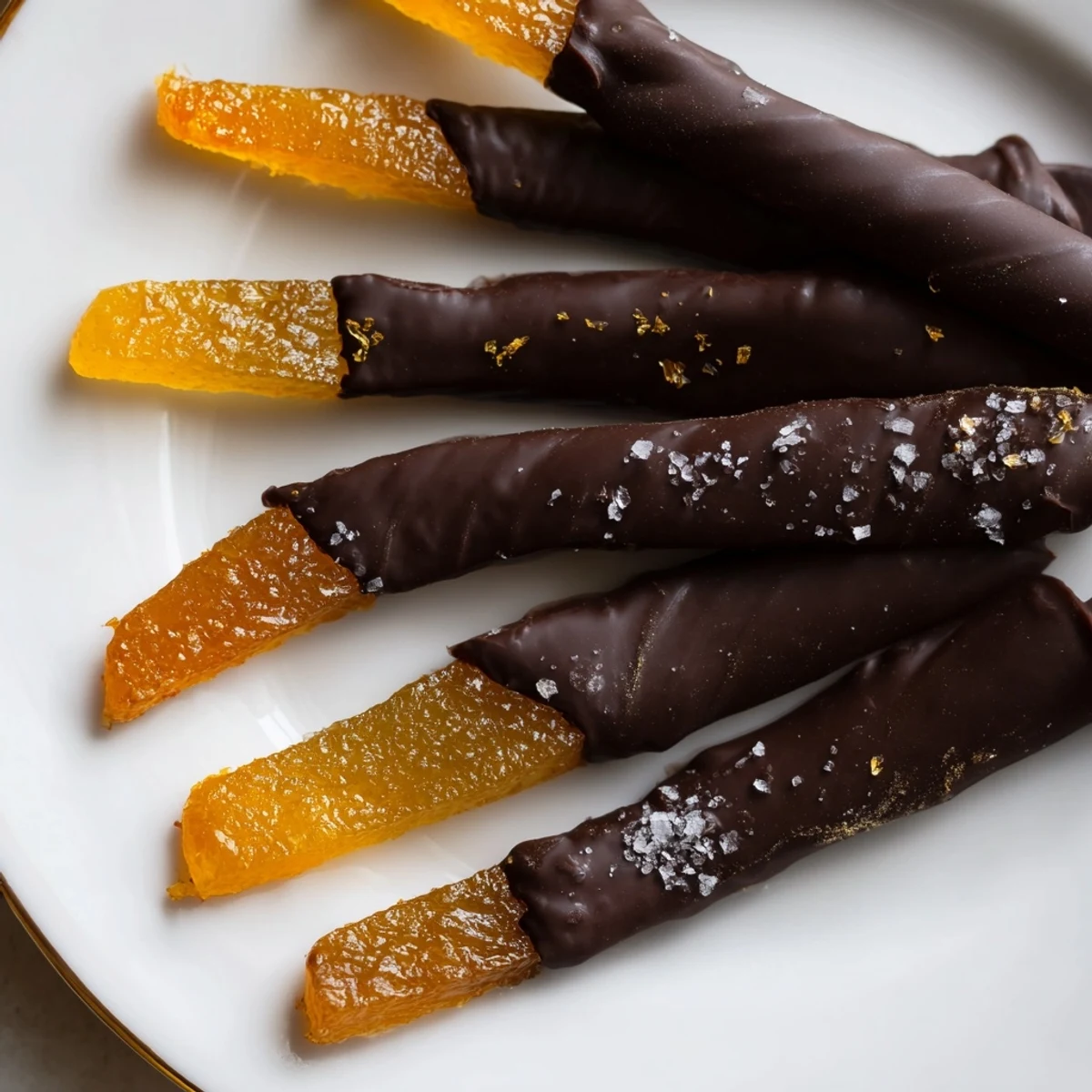
 These chocolate covered orange peels transform simple citrus into an elegant confection. Fresh orange peel strips are blanched to remove bitterness, then slowly simmered in sugar syrup until translucent and tender.
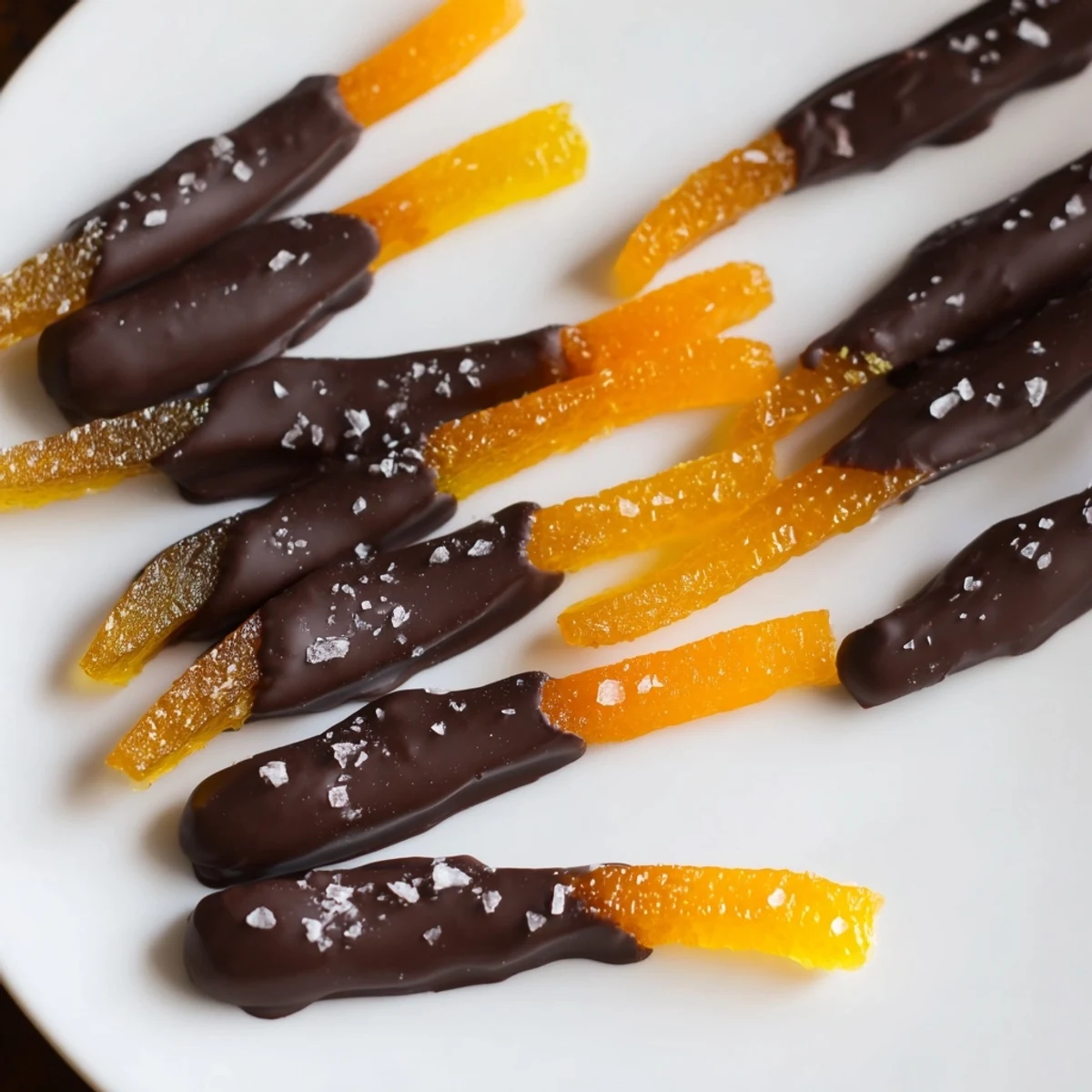
Once dried, each candied strip is dipped halfway into melted dark chocolate and finished with a touch of flaky sea salt. The result is a beautiful balance of bright orange zest and rich, smooth chocolate.
They keep well in an airtight container for up to two weeks, making them ideal for gift boxes, holiday platters, or an afternoon sweet with coffee.
The kitchen smelled like a citrus grove in the middle of January, steam curling up from the saucepan while outside the windows everything was gray and frozen. I had bags of oranges leftover from a holiday fruit basket nobody touched, and the idea of wasting them felt worse than the effort of candying their peels. That afternoon I discovered something magical: the thin rind I usually tossed in the compost could become the most elegant little sweet in the house.
I packed a tin of these for my neighbor Elena last February and she stood in her doorway eating three of them before she even said thank you. She now texts me every December asking if I am making the orange things again. It became our tiny winter tradition without either of us planning it.
Ingredients
- 3 large oranges: Use thick skinned navels or Valencias if you can find them, because thinner peels tear during boiling and give you less to bite into.
- 1 cup (200 g) granulated sugar: Plain white sugar keeps the syrup clear and lets the orange color shine through without muddying it.
- 1 cup (240 ml) water: Just enough to dissolve the sugar and submerge the peels for a slow candying bath.
- 200 g dark chocolate (at least 60% cocoa): Splurge on the good stuff here because there are only three ingredients and the chocolate flavor needs to hold its own against concentrated citrus.
- 1 tsp flaky sea salt (optional): Maldon or any finishing salt adds a tiny crunch that makes each piece unexpectedly complex.
Instructions
- Score and peel the oranges:
- Wash each orange thoroughly under running water, then use a sharp knife to score the peel from stem to navel in four vertical lines. Gently pry the peel away in quarters, keeping the white pith attached since it will soften during blanching.
- Cut into strips:
- Slice each quarter peel into uniform strips about half a centimeter wide so they candy evenly and look neat when coated in chocolate.
- Blanch three times:
- Put the strips in a saucepan, cover with cold water, bring to a rolling boil for two minutes, then drain completely. Repeat this two more times and you will notice the bitter edge mellowing with each round.
- Make the sugar syrup:
- Combine the sugar and water in the same saucepan and bring it to a gentle simmer, stirring until every grain dissolves and the liquid runs clear.
- Candy the peels:
- Slide the blanched strips into the syrup and let them burble away on low heat for forty minutes, stirring once in a while so nothing sticks. The peels are ready when they look glassy and translucent at the edges.
- Dry on a rack:
- Use tongs to lift each strip onto a wire rack set over parchment paper and let them air dry for at least an hour until the surface loses its sticky sheen.
- Melt the chocolate:
- Set a heatproof bowl over a pan of barely simmering water and stir the chocolate gently until it melts into a smooth, glossy pool with no lumps remaining.
- Dip and finish:
- Dip each peel halfway into the chocolate, let the extra drip off over the bowl, and lay it gently on fresh parchment. Sprinkle with flaky salt while the chocolate is still wet, then leave everything alone for thirty minutes until set.
 Save to Pinterest
 There is a particular quiet in the kitchen when the last dipped peel is laid out in a row and the only sound is the gentle tap of tongs on parchment. That is the moment the whole house smells like chocolate and orange blossoms and you realize you made something beautiful from scraps.
Storing Your Candied Peels
Keep the finished peels in a single layer in an airtight container at room temperature and they will stay perfect for up to two weeks. Avoid stacking them or the chocolate sides will stick together and pull away from the peel when you try to separate them. If your kitchen runs warm, a cool dry cupboard works better than the counter.
Swapping the Citrus
Grapefruit peels bring a wonderful rosy bitterness that pairs beautifully with an even darker chocolate around the seventy percent mark. Lemon peels candy up brighter and sharper, almost like a grown up version of lemon drop candy. Whatever fruit you choose, follow the same triple blanch rule because every citrus variety hides bitterness behind its fragrance.
Tempering for a Professional Finish
If you want that satisfying snap when you bite through the chocolate shell, tempering is worth the extra attention even though it sounds fussy. Properly tempered chocolate also develops a satin sheen that makes each piece look like it came from a confectioners showcase.
- Use a thermometer and bring the melted chocolate to about forty five degrees Celsius before cooling it down to twenty seven and nudging it back to thirty one.
- Stir slowly and steadily during the cooling phase because agitation is what aligns the cocoa butter crystals.
- Work quickly once tempered because the window for dipping is narrow and the chocolate will thicken as it cools.
 Save to Pinterest
 Every time I make these I think about how the best treats usually come from the part of the ingredient most people throw away. That feels like the kindest kind of cooking to me.
Recipe FAQs
- → Can I use milk or white chocolate instead of dark chocolate?
-
Yes, milk or white chocolate works beautifully. Keep in mind they are sweeter, so the contrast with the candied peel will be milder. White chocolate adds a creamy, vanilla note that pairs well with the orange.
- → Why do I need to blanch the orange peels multiple times?
-
Blanching the peels three times removes the bitter compounds from the white pith. Skipping this step can leave an unpleasant bitterness that overwhelms the sweetness of the syrup and chocolate.
- → How do I know when the candied peels are fully cooked?
-
The peels are ready when they appear translucent and feel soft and pliable, typically after about 40 minutes of gentle simmering. They should no longer look opaque or feel stiff.
- → Can I use other types of citrus for this confection?
-
Absolutely. Grapefruit, lemon, and tangerine peels all work well with the same candying method. Grapefruit peels offer a lovely rosy bitterness, while lemon peels give a sharper, more fragrant result.
- → How should I store chocolate covered orange peels?
-
Store them in an airtight container at cool room temperature for up to two weeks. Avoid refrigerating, as condensation can cause the chocolate to bloom and lose its smooth finish.
- → Do I need to temper the chocolate before dipping?
-
Tempering is not strictly necessary but produces a shinier, snappier finish. If you skip tempering, the chocolate will still taste delicious but may have a softer set and slightly matte appearance.